
Quick Answer
If you are 50+ and earned over $150,000 in prior-year wages, your 401(k) catch-up contribution loses its pre-tax status in 2026. Most tech workers should still max out the standard $24,500 deferral first, then treat the Roth catch-up as forced tax-free growth rather than a lost deduction. High earners near retirement in 10 years or less should watch bracket assumptions closely before assuming this is a bad deal.
Updated January 2026
How We Evaluated
This roundup screened five major approaches tech workers and their HR teams are using to handle the 2026 Roth catch-up mandate, drawing on IRS guidance, plan recordkeeper communications, and public analyses from major custodians. We weighted each approach by tax impact, ease of implementation, and how well it fits people already near the income threshold. Figures were verified against IRS.gov. No provider paid for placement here; the ranking follows the rubric below, and the same standard applies to every option discussed.
| Criterion | Weight (%) | What We Measured |
|---|---|---|
| Tax Impact | 30% | Net difference between losing the pre-tax deduction now versus tax-free withdrawals later |
| Eligibility Fit | 20% | How cleanly the approach applies to someone already over the $150,000 threshold |
| Implementation Ease | 15% | Whether payroll systems and plan documents already support it without manual intervention |
| Flexibility | 15% | Room to adjust as RSU vesting or bonus timing shifts income year to year |
| Long-Term Payoff | 10% | Effect on future RMDs, Medicare surcharges, and estate planning |
| Transparency | 10% | How clearly the plan or provider discloses the change to affected employees |
Most people won’t notice this until their January pay stub looks different. Starting this year, the 401k tax break 2026 question isn’t about contribution limits going up, it’s about who loses the ability to deduct part of what they put in. The Internal Revenue Service confirmed the 2026 employee deferral limit rose to $24,500, but buried inside that announcement is a mandate that quietly strips the pre-tax option from a specific group: workers 50 and older who earned more than $150,000 in wages the prior year, per the IRS’s 2026 limit announcement. Tech salaries, stacked with bonuses and vesting equity, push a lot of mid-career engineers and managers over that line without them realizing it.
The criterion that separated a smart response from a costly one, across every approach we reviewed, was timing. Not tax bracket. Not plan provider. Timing: whether someone acted before their December payroll settings locked in, or found out in February when it was too late to adjust withholding for the year.
| Scenario / Reader Profile | Best Pick | Key Metric | Budget Tier |
|---|---|---|---|
| Senior engineer over $150k, wants simplicity | Max standard deferral first, accept Roth catch-up | $24,500 base limit | Budget |
| Big Tech employee with mega backdoor Roth access | Layer mega backdoor Roth on top | $72,000 total plan limit | Premium |
| Age 60-63 with high income | Super catch-up under SECURE 2.0 | $11,250 higher catch-up tier | Mid |
| Plan without Roth feature yet | Push HR for plan amendment before Q1 | Amendment deadline end of 2026 | Budget |
| Near-retiree worried about RMDs | Roth conversion ladder planning | 10-15 year time horizon | Mid |
The 2026 Catch-Up Rule That’s Quietly Eliminating a Tax Deduction
Here’s the blunt version. Starting January 1, 2026, if you’re 50 or older and made more than $150,000 in wages from your employer in 2025, your catch-up contributions can no longer go in pre-tax. They have to be Roth. That’s not optional, and there’s no workaround inside the plan itself. The IRS laid this out plainly: catch-up contributions must be designated as Roth once prior-year wages cross that line.
Before 2026, you had a choice. Pre-tax catch-up lowered your taxable income today. Roth catch-up grew tax-free but cost you the deduction. Now, for anyone above the threshold, that choice is gone. The Treasury and IRS finalized this under SECURE 2.0 Section 603, and the final regulations confirm there’s no individual opt-out. If your plan doesn’t offer a Roth feature yet, your catch-up contributions may simply stop being accepted until the plan adds one, which recordkeepers have until the end of 2026 to do.
Why Tech Salaries Make This Change Hit Harder Than Most Realize
Tech compensation is lumpy. Base pay alone might sit under $150,000, but add a year-end bonus or a chunk of vested RSUs and suddenly a mid-level engineer clears the threshold without ever seeing a six-figure base salary line item. That’s the trap: the $150,000 test looks at total prior-year FICA wages, not base salary, so equity vesting timing matters as much as the raise you got last spring.
Bonus timing compounds this. If your company pays year-end bonuses in December, that income lands in the same tax year it’s earned, pushing you over the line for the following year’s catch-up rules. Shift that same bonus to January, and you might stay under the threshold for another year. Few employees think about this until it’s already decided for them by payroll calendar quirks they don’t control.
Plan administrators at large tech employers often auto-enroll eligible employees in catch-up contributions once they hit age 50, without flagging that the tax treatment just changed. If your HR team hasn’t sent a specific notice about Roth catch-up defaults, ask. Don’t assume silence means nothing changed.
Check your prior-year W-2 Box 1 wages before assuming you’re under $150,000. RSU vesting and bonuses often push total wages higher than base salary alone, and that’s the number your plan uses to decide your catch-up tax treatment.
How Much Tax You’re Actually Losing on Those Extra Contributions
Let’s do the math plainly. Say you’re 52, earn a $180,000 base plus bonus, and sit in the 32% federal marginal bracket. Under the old rules, an $8,000 catch-up contribution saved you roughly $2,560 in federal tax that year (8,000 x 0.32). Under the 2026 mandate, that same $8,000 goes in after-tax, so you pay the $2,560 now instead of deferring it. For someone at the 37% top bracket, that same contribution costs about $2,960 in immediate tax you no longer avoid.
The flip side: that money grows tax-free and comes out tax-free in retirement, assuming you follow Roth withdrawal rules. If you’re 10 to 15 years from retirement and expect similar or higher tax rates later (a real possibility if you move to a higher-tax state or Social Security pushes you into a higher bracket), the Roth treatment can still work in your favor over time. The Vanguard How America Saves 2025 report found that half of participants already hit or exceeded target savings rates, meaning many high earners were maxing contributions anyway. This mandate doesn’t change how much you can save, only how the tax bill is timed.
The real question isn’t whether you lose money today. You do. It’s whether your tax rate in retirement will be lower than it is now. If you plan to retire in a lower-tax state or expect income to drop meaningfully, the lost deduction stings more. If you expect similar or higher rates later, paying tax now at a known rate isn’t necessarily a bad trade. For readers weighing this against broader retirement account choices, the comparison between account types matters just as much as this one rule; see our breakdown of Roth IRA vs Traditional IRA: Which One Actually Wins at Retirement? for the underlying logic.
Workarounds Tech Workers Are Exploring (and Their Limitations)
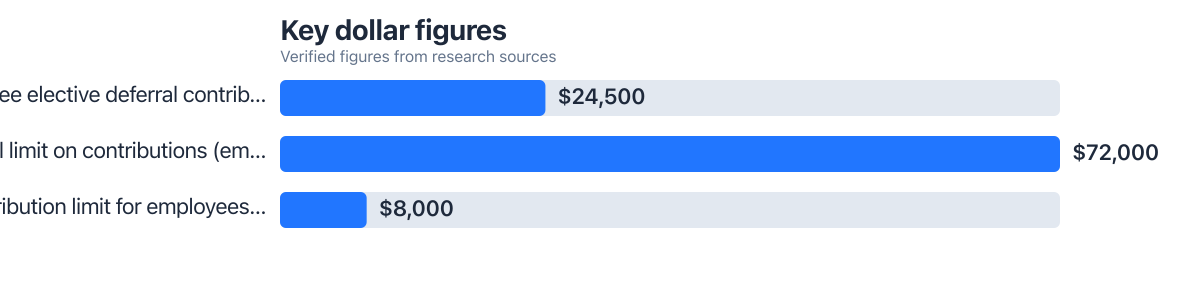
The first move, and the easiest, is maxing your standard pre-tax deferral before worrying about catch-up at all. The regular limit is $24,500 in 2026, per the IRS 2026 limit notice, and none of that base amount is affected by the Roth catch-up rule. Only the catch-up portion, above and beyond that base, gets the Roth treatment if you’re over the income threshold.
Second, look at whether your plan supports a mega backdoor Roth. Some large tech employers, particularly those using Fidelity or Empower as recordkeepers, allow after-tax contributions up to the overall plan limit of $72,000 for 2026 (employee plus employer contributions combined, per IRS contribution limit rules), then convert those to Roth. This can absorb a much bigger chunk of savings than the catch-up alone, and it’s worth exploring as a genuine offset rather than treating the lost catch-up deduction as a standalone loss. Our deeper look at Advanced AI Portfolio Strategies Most Retail Investors Never Discover covers how to model these layered contributions without guessing.
Third, don’t overlook HSA contributions if you have a high-deductible health plan. That space is separate from the 401(k) limits entirely and gives you another pre-tax bucket that isn’t touched by any of this. None of these workarounds eliminate the mandate. They just give you more room elsewhere to balance out what you lose in pre-tax catch-up space.
What Your Specific 401(k) Plan Must Do by January 2026
Employers had until the end of 2026 to formally amend plan documents adding Roth catch-up features, but most large tech-sector plans through Fidelity, Vanguard, and Empower moved earlier to avoid mid-year payroll chaos. If your plan hasn’t added a Roth option yet, catch-up contributions for affected high earners may simply be blocked once the threshold is crossed, rather than defaulted anywhere.

Five Approaches to Handling the 2026 Roth Catch-Up Mandate
Real-World Example: The Straightforward Max-Out
Max standard pre-tax deferral first, best for anyone who wants simplicity without restructuring their whole savings plan. This approach delivers the full $24,500 pre-tax deduction before any Roth catch-up rules even apply, per the IRS 2026 limit update.
Key metrics: base limit $24,500, catch-up limit $8,000 for ages 50-59 and 64+, super catch-up $11,250 for ages 60-63, threshold $150,000 in prior-year wages triggering Roth-only catch-up treatment (all figures from the IRS newsroom announcement).
This is the default move for most tech professionals who don’t want to think too hard about layering strategies. It doesn’t optimize around the mandate, but it doesn’t need to. You still get the full standard deduction, and the catch-up portion, wherever it lands tax-wise, is additional savings you wouldn’t otherwise have.
Pros: Simple to execute, requires no plan features beyond the basics, preserves the full $24,500 pre-tax deduction regardless of income. Cons: Doesn’t address the lost catch-up deduction directly, leaves money on the table if your plan supports more advanced strategies like mega backdoor Roth.
Before assuming you need a complex workaround, confirm your standard deferral is actually maxed. Many high earners hit the catch-up threshold conversation before they’ve even filled their base $24,500 bucket, especially if they front-loaded contributions earlier in the year.
Real-World Example: Layering the Mega Backdoor Roth
Mega backdoor Roth is best for employees at large tech firms whose plans allow after-tax contributions beyond the standard limit. It can absorb far more savings than the catch-up dispute alone, making the lost pre-tax deduction feel smaller in context of a total $72,000 according to Internal Revenue Service plan ceiling.
Key metrics: overall plan limit $72,000 including employer match, employee, and after-tax contributions combined for 2026 per IRS contribution rules; standard deferral $24,500; catch-up $8,000 standard tier.
Not every plan supports this. It requires both an after-tax contribution feature and in-plan Roth conversion or in-service withdrawal capability, which tends to be more common at large employers using Fidelity or Empower as recordkeepers. Workers with access to this should model it before writing off the Roth catch-up mandate as a pure loss, since the math changes when you’re filling a much larger tax-advantaged bucket overall.
If you’re weighing this against simpler brokerage savings, the comparison isn’t close for most tax brackets, assuming your plan actually offers the feature. The gap comes down to plan design more than personal preference.
Pros: Can shelter far more than the catch-up amount alone, works well alongside forced Roth catch-up rather than against it, no income limit unlike a regular Roth IRA. Cons: Not all plans offer this feature, requires more paperwork and conversion steps than a standard deferral.
Real-World Example: The Super Catch-Up for Ages 60-63
Super catch-up contributions are best for workers in the narrow 60-63 age band who want to front-load savings before required minimum distributions and Medicare premium calculations start affecting their finances. The limit jumps to $11,250 for this group, higher than the standard $8,000 according to Internal Revenue Service catch-up tier available to everyone else 50 and older.
Key metrics: super catch-up $11,250 for ages 60-63 specifically, standard catch-up $8,000 for other eligible ages, income threshold $150,000 triggering mandatory Roth treatment (all per the IRS 2026 limits release).
This narrow window exists because SECURE 2.0 recognized that people closer to retirement often have fewer years left to build savings, so lawmakers gave them a bigger allowance. If you’re in this age band and above the income threshold, all $11,250 goes in as Roth, not just the standard $8,000 portion. That’s a bigger immediate tax hit, but also a bigger tax-free bucket down the road.
Pros: Highest catch-up ceiling available under current law, particularly valuable in the final stretch before retirement. Cons: Only applies to a four-year age window, and the larger Roth requirement means a bigger upfront tax bill than the standard catch-up tier.
Real-World Example: Plans Without a Roth Feature
Pushing for a plan amendment is the right move if your employer’s 401(k) doesn’t yet offer a Roth option, since affected high earners may lose catch-up eligibility entirely until the plan adds one, and recordkeepers had until the end of 2026 to comply.
Pros: Getting ahead of this in writing with HR protects your ability to contribute at all. Cons: You have limited control over your employer’s timeline, and some smaller plans may lag past the deadline.
Real-World Example: Planning the Roth Conversion Ladder
Roth conversion ladders work best for tech professionals within 10 to 15 years of retirement who want to manage future required minimum distributions and Medicare IRMAA surcharges rather than just react to this year’s tax bill. Converting traditional balances gradually in lower-income years, say right after leaving a high-paying tech job but before Social Security starts, can smooth out the tax hit over several years instead of taking it all at once.
Key metrics: this strategy plays directly off the same $150,000 threshold driving the catch-up mandate, since income dips after leaving a job often create windows where conversions cost less in tax, and it interacts with the eventual RMD calculations tied to traditional balances left unconverted (per IRS catch-up contribution guidance). The forced Roth catch-up contributions you’re making now, ironically, reduce the balance subject to RMDs later, since Roth 401(k) funds carry no lifetime RMD requirement for the original owner under current law.
This is less about reacting to 2026 specifically and more about using the mandate as a nudge to build a broader Roth conversion plan. If you already max contributions and have a mix of pre-tax and Roth balances, a financial planner or a modeling tool can help sequence conversions to avoid pushing yourself into a higher bracket unnecessarily. For readers building out a full withdrawal strategy alongside this, our guide on Beyond the 4 Percent Rule: Retirement Withdrawal Strategies That Actually Work covers the sequencing logic in more depth, and the decision on when to start Social Security interacts with this too, which we cover in Should You Delay Social Security to 70 or Claim It Early?
Pros: Reduces future RMD balances and can lower lifetime Medicare surcharge exposure, works well alongside the forced Roth catch-up rather than fighting it. Cons: Requires multi-year planning and careful bracket management, not a quick fix for this year’s tax bill alone.
Also Worth Considering
Taxable brokerage accounts remain a fallback for anyone maxed out everywhere else, though they lack any tax-advantaged growth, unlike the $72,000 total plan ceiling available through employer plans per IRS rules. Solo 401(k) plans for self-employed tech consultants generally follow similar catch-up rules, though the income threshold calculation differs slightly since it’s based on net self-employment earnings rather than W-2 wages. HSA contributions, while separate from 401(k) limits entirely, deserve a second look as an additional pre-tax bucket unaffected by any of this.
For those juggling multiple employers, the $150,000 threshold is cumulative across all W-2 income sources. If you worked for two companies in 2025 and earned $80,000 from one and $75,000 from another, your total FICA wages hit $155,000, triggering the Roth catch-up mandate. This applies even if one employer didn’t report income until late in the year. If you’re a 1099 contractor on the side, that income doesn’t count toward the threshold for this rule, which is based solely on W-2 wages, not self-employment earnings. But that doesn’t mean you’re off the hook: your total W-2 income still determines eligibility.
For HRIS and payroll teams, configuring auto-Roth routing for catch-up only is now critical. In Workday, you can set up a rule in the payroll policy where “Catch-up Contribution” is routed to Roth if “Total Prior-Year W-2 Wages” > $150,000. In ADP Run, you can use the “Contribution Type Override” feature to apply Roth treatment only to catch-up contributions when the employee’s 2025 W-2 wage total exceeds the threshold. These settings must be tested in a sandbox environment before the 2026 payroll cycle, and employers must ensure that employees are notified via pay stubs or HR portals when their catch-up is being treated as Roth. For employees who don’t understand the change, a simple explanation like “Your catch-up contribution is now after-tax due to last year’s earnings” can prevent confusion.
Related reading: Why 2026’s New Tax Rules Make Roth Conversions a Smarter Move.
Frequently Asked Questions
What is the 401k tax break 2026 change everyone is talking about?
It refers to the SECURE 2.0 mandate requiring workers 50 and older who earned over $150,000 in prior-year wages to make their catch-up contributions as Roth (after-tax) rather than pre-tax, starting in 2026. This removes the immediate tax deduction on catch-up amounts for high earners, though the standard $24,500 deferral limit is unaffected.
Who exactly is affected by the 2026 Roth catch-up rule?
Anyone age 50 or older whose prior-year FICA wages from their employer exceeded $150,000 falls under the mandate. This is based on total W-2 wages, including bonuses and vested equity, not just base salary.
Can I still contribute pre-tax if I’m over the income threshold?
You can still contribute the standard $24,500 deferral pre-tax regardless of income. Only the catch-up portion above that base, up to $8,000 or $11,250 depending on age, must go in as Roth if you’re over $150,000.
What happens if my 401(k) plan doesn’t offer a Roth option?
Plans had until the end of 2026 to add a Roth feature. If yours hasn’t, affected high earners may be unable to make catch-up contributions at all until the plan is amended, so it’s worth confirming your plan’s status directly with HR.
Does this rule affect self-employed people with solo 401(k) plans?
Yes, the same Roth catch-up mandate applies to solo 401(k) plans, though the income threshold is calculated using net self-employment earnings rather than W-2 wages, which can create timing differences for freelancers and consultants.
Is losing the pre-tax catch-up deduction actually a bad deal?
Not necessarily. You lose the immediate deduction, but the money grows and withdraws tax-free later. Whether it’s a net loss depends on whether your tax rate in retirement ends up lower or higher than your current bracket.
Can I use a mega backdoor Roth to offset the lost catch-up deduction?
If your plan supports after-tax contributions and in-plan conversions, yes, this can shelter far more savings than the catch-up dispute alone, up to the overall $72,000 plan limit for 2026.
How does the super catch-up for ages 60-63 interact with this rule?
Workers age 60-63 get a higher catch-up limit of $11,250 instead of the standard $8,000, but the same $150,000 income threshold applies, meaning the entire super catch-up amount must go in as Roth for affected high earners.
Sources
- Internal Revenue Service, 401(k) limit increases to $24,500 for 2026
- Internal Revenue Service, Retirement Topics: Catch-Up Contributions
- Internal Revenue Service, Final Regulations on New Roth Catch-Up Rule
- Internal Revenue Service, 401(k) and Profit-Sharing Plan Contribution Limits
- Vanguard, How America Saves 2025 Report
- Internal Revenue Service, Retirement Plans Home
- U.S. Department of Labor, Types of Retirement Plans