
Quick Answer
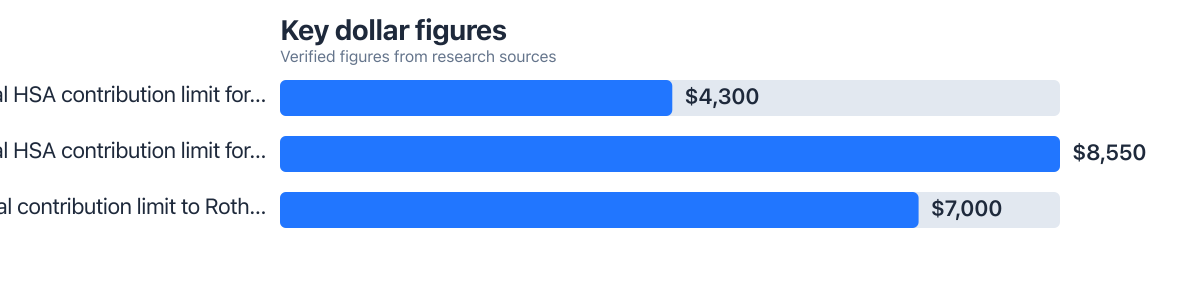
For most tech professionals in 2025, an HSA beats a Roth IRA as an emergency fund. Why? Three tax breaks stacked on top of each other. Contributions are tax-deductible, earnings grow tax-free, and withdrawals for qualified medical expenses come out tax-free too. The 2025 cap sits at $4,300 for self-only coverage. A third of HSA holders pulled out more than they put in during 2023, which tells you people actually use these accounts rather than just parking money in them. IRS 2025 guidelines confirm this flexibility.
Updated July 2025
Key Takeaways
- HSA contributions in 2025 cap at $4,300 for self-only HDHPs, per IRS rules. IRS 2025 guidelines
- Over one-third of HSA accountholders withdrew more than they contributed in 2023. EBRI 2025 report
- Roth IRA contributions can be withdrawn at any time without penalty. IRS Roth IRA rules
- HSAs allow investment in stocks, ETFs, and mutual funds through providers like Fidelity and Charles Schwab. IRS 2025 limits
- Non-medical HSA withdrawals before age 65 incur a 20% penalty. IRS 2025 guidelines
- Family HDHP coverage allows up to $8,550 in annual HSA contributions. IRS 2025 data
Picking between a Roth IRA and a Health Savings Account for your emergency cushion in 2025 really comes down to three things: your goals, how stable your job is, and what your medical needs look like. Tech workers on high-deductible health plans usually come out ahead with an HSA. It’s built for exactly this purpose, protecting you against medical costs while handing you tax breaks most accounts can’t match. The IRS caps 2025 self-only HDHP contributions at $4,300, and that number shapes how much cushion you can build before penalties kick in. IRS 2025 guidelines define eligibility and rules.
Tech hiring has been choppy for a couple of years now. Add rising costs for telehealth and mental health care, and a medical-linked emergency fund starts looking a lot more useful than it used to. A solid emergency fund doesn’t just cover a blown transmission or a broken water heater. It can absorb a therapy copay, an urgent prescription, or a surprise specialist bill. The HSA fits that role naturally, especially when you pair it with expense-tracking software that flags medical spending as it happens. ai expense tracking couples: manage helps users track spending in real time, identifying eligible medical costs before they become emergencies.
Why an HSA Wins for Medical Emergencies
For most tech professionals, the HSA simply does more work than a Roth IRA when medical costs are the concern. Three tax advantages stack together here: deductible contributions, tax-free growth, and tax-free withdrawals on qualified medical expenses. A Roth IRA gives you two of those pieces at best, tax-free growth on qualified distributions after 59½, plus penalty-free withdrawal of your original contributions whenever you want. IRS 2025 rules confirm that HSA funds can be used for non-medical emergencies only after age 65, with a 20% penalty before then.
Medical vs. Non-Medical Use: The Core Trade-Off
Tax-free treatment only applies when HSA money goes toward qualified medical expenses. Pull it out for anything else before you turn 65, and a 20% penalty follows you out the door. Roth IRA contributions don’t carry that baggage. You can take them out anytime, penalty-free, tax-free, no questions asked. That’s what makes Roth accounts the better fit for car repairs, sudden unemployment, or anything unrelated to a doctor’s office. Still, if you’re on a high-deductible plan common in tech benefits packages, the HSA’s medical restriction works in your favor rather than against you. Flip that around, though: if you don’t expect meaningful medical costs, the restriction turns into dead weight.
Key Takeaway: In 2025, an HSA is better than a Roth IRA for emergency savings if your priority is medical cost protection. The triple tax advantage applies only to medical use. IRS 2025 guidelines show contributions up to $4,300 for self-only HDHPs.
Accessing Funds Before Age 65
Roth IRA contributions come out penalty-free whenever you need them. Doesn’t matter if you’re 28 or 58, the IRS lets you touch your original contributions without tax or penalty. Earnings are a different story: pull those before 59½ and you’re looking at a 10% penalty plus ordinary income tax. HSAs work in reverse. Non-medical withdrawals before 65 trigger a 20% penalty, full stop. IRS Roth IRA rules clarify this distinction.
A lot of tech workers deal with lumpy income these days, gig contracts, project-based work, layoff cycles that hit without warning. That volatility makes the Roth IRA’s easy access genuinely valuable for anything outside medical costs. But here’s the flip side: if you can hold off on non-medical spending until 65, the HSA edges ahead. Put in the full $4,300 for 2025, let it grow tax-free, and you can tap it for medical costs at any age without penalty. IRS 2025 data shows this structure supports long-term health savings.
Key Takeaway: Roth IRAs allow penalty-free access to contributions anytime. HSA withdrawals for non-medical emergencies before 65 carry a 20% penalty. The IRS confirms this in Roth IRA distribution rules. For non-medical emergencies, Roth IRA’s liquidity wins.
The Triple Tax Advantage Explained
Nothing else in the tax code quite matches what an HSA offers. Deductible going in, tax-free growth while it sits, tax-free coming out for qualified medical costs. Three breaks, one account. Compare that to the Roth IRA, which only delivers on the growth side for qualified distributions. The 2025 ceiling is $4,300 for self-only HDHP coverage and $8,550 for family coverage, per IRS guidelines. IRS 2025 limits define these thresholds.
Something worth pointing out: more than 15% of HSA accountholders had moved balances into non-cash assets by 2023, a sign that investment strategies inside these accounts are catching on. Yet only a third of holders withdrew more than they’d contributed that year. That gap tells a story. Most people are still using HSA dollars for actual medical bills rather than treating the account like a brokerage account. EBRI 2025 report confirms this trend. For tech workers stuck with high-deductible plans, that tax efficiency makes the HSA a strong long-term medical savings vehicle.
Key Takeaway: HSA contributions in 2025 are capped at $4,300 for self-only plans. They grow tax-free and can be used tax-free for medical costs. IRS 2025 rules confirm the triple tax benefit is unmatched by Roth IRAs.
Best Platforms for Investing HSA and Roth Dollars
Both account types let you go beyond cash sitting idle. Fintech platforms have caught on, too, and now bolt robo-advisor tools onto HSA offerings. Fidelity, Charles Schwab, and Health Savings Alliance all let HSA holders buy stocks, ETFs, and mutual funds inside the account. Robo tools help automate investment decisions. Roth IRAs support brokerage investing as well, though contributions there max out at $7,000 a year for anyone under 50. IRS 2025 limits confirm this cap.
Self-directed HSAs have picked up steam among tech workers specifically. Some platforms even flirt with crypto or private equity exposure, though most still keep those doors shut. Roth IRAs, by contrast, stay fairly standardized across providers. Automation benefits both account types. Advanced AI Portfolio Strategies Most Retail Investors Never Discover shows how automation can boost returns over time. Given the higher family contribution ceiling and the triple tax break, the HSA edges out the Roth for long-term growth potential.
Key Takeaway: In 2025, HSA investment limits are $8,550 for family coverage. Roth IRAs are capped at $7,000 for under-50s. Platforms like Fidelity and Schwab offer full brokerage access. IRS 2025 data confirms HSA growth potential is unmatched for medical savings.
When the HSA Isn’t the Right Choice
An HSA doing double duty as a general emergency fund has real downsides. Every dollar you pull for a non-medical reason before 65 costs you 20% in penalties. That single fact makes it a poor fit if you expect to tap the account for things unrelated to health care. There’s another wrinkle, too: contribution eligibility depends on staying enrolled in an HDHP. Switch jobs, lose that coverage, and your ability to keep contributing disappears with it. IRS 2025 guidelines define eligibility clearly.
Eligible expenses aren’t as broad as people assume, either. Over-the-counter medications, for instance, no longer qualify unless a doctor prescribes them. That trims flexibility more than most account holders expect. On top of that, plenty of HSA balances stay thin simply because contributions have been modest. Only 15% of accountholders had moved beyond cash holdings. EBRI report shows most use HSA funds for immediate medical costs, not long-term savings.
Key Takeaway: HSA funds used for non-medical emergencies before 65 face a 20% penalty. Only 15% of HSA accountholders invested beyond cash in 2023. EBRI 2025 data shows most use HSA funds for medical needs, not general emergencies.
| Feature | Roth IRA | HSA |
|---|---|---|
| 2025 Max Contribution (Under 50) | $7,000 | $4,300 (self-only) |
| Qualified Medical Use | No | Yes, tax-free |
| Non-Medical Withdrawal Penalty (Before 65) | None on contributions | 20% |
| Triple Tax Advantage | No | Yes |
Frequently Asked Questions
Can I use an HSA as my emergency fund?
Yes, but only for qualified medical expenses. Using HSA funds for non-medical emergencies before age 65 incurs a 20% penalty. IRS 2025 guidelines confirm this rule.
Is a Roth IRA better than an HSA for job loss emergencies?
Yes, for non-medical emergencies. Roth IRA contributions can be withdrawn at any time without penalty. HSA withdrawals for non-medical use before 65 carry a 20% penalty. IRS Roth IRA rules confirm this flexibility.
What’s the 2025 HSA contribution limit for family coverage?
The maximum annual HSA contribution for family HDHP coverage in 2025 is $8,550. This limit applies to all family-eligible plans. IRS 2025 data confirms this figure.
Can I invest HSA funds in stocks?
Yes. Many HSA providers, including Fidelity and Charles Schwab, allow investment in stocks, ETFs, and mutual funds. Advanced AI Portfolio Strategies Most Retail Investors Never Discover shows how this boosts long-term growth.
How much can I contribute to a Roth IRA in 2025?
Individuals under age 50 can contribute up to $7,000 to a Roth IRA in 2025. Those 50 or older can contribute up to $8,000 with catch-up contributions. IRS 2025 limits confirm this.
Can I use HSA funds for mental health therapy?
Yes. Qualified medical expenses include mental health therapy, prescriptions, and telehealth visits. The IRS lists these as eligible. IRS 2025 guidelines confirm this eligibility.
Sources
- Internal Revenue Service: Health Savings Accounts (2025)
- Internal Revenue Service: Roth IRA Distribution Rules (2025)
- Internal Revenue Service: IRA Contribution Limits (2025)
- Employee Benefit Research Institute: HSA Withdrawal Trends (2025)
- CNBC: Why an HSA Is Like an Extra-Strength Roth IRA (Sabino Vargas)
- Best AI Cash Flow Forecasting Tools for Small Business Owners on a Budget