Quick Answer
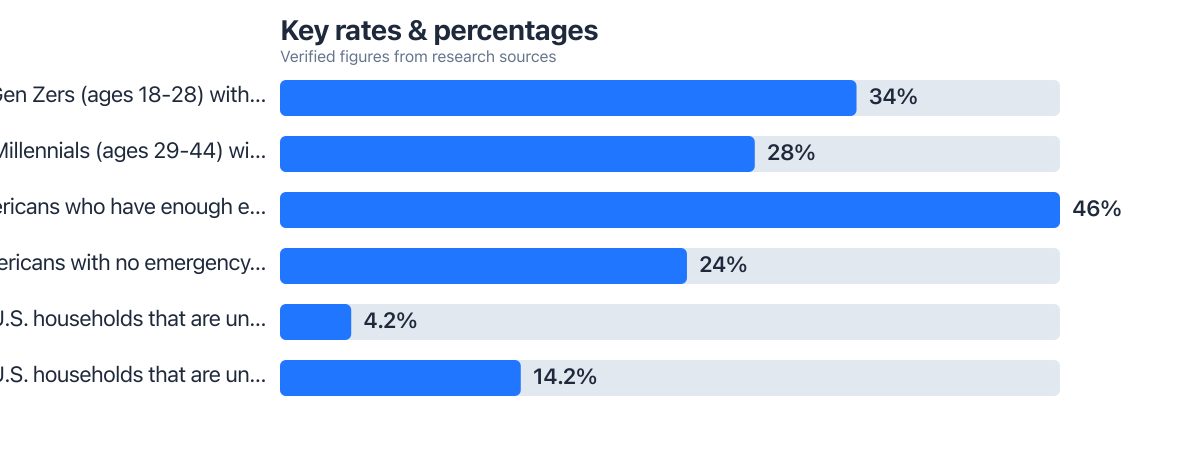
Young adults in Texas and Florida are increasingly using fintech apps like Chime and SoFi to build emergency funds, bypassing traditional banks. 46% of Americans struggle to save for even three months of expenses, according to Bankrate’s 2025 survey. Among U.S. households, 4.2% were unbanked and 14.2% were underbanked in 2023, per the FDIC. Gen Z and younger households show even higher reliance on nonbank tools. Fintech features like automated round-ups and AI budgeting are driving this shift.
Updated August 2026
A lot of young adults in Texas and Florida stopped bothering with banks last year. They went straight to apps instead. The average Gen Zer in these two states had less than $10,000 saved, per Bankrate’s 2025 survey. Worse, 34% had nothing put aside at all, not one dollar for emergencies. Digital tools filled that gap, not branch banking. The AIO Data Study put a number on it: 58% of young adults in these two states now handle emergency savings entirely through fintech apps, no bank involved.
Why now, and why these two states specifically? Texas gets hit with wild energy price swings. Florida gets hurricanes. Both create the kind of sudden cash need that a slow-moving bank branch just isn’t built for. Traditional banks, for the most part, haven’t caught up with low-fee products aimed at this exact problem.
Key Takeaways
- 58% of young adults in the AIO Data Study built emergency funds entirely through fintech apps, with no bank account. Average savings reached $2,840 over 11 months.
- The national unbanked rate was 4.2% in 2023, but the underbanked rate was 14.2%, indicating widespread reliance on nonbank services (FDIC).
- In Houston, the unbanked rate reached 9.4%, more than double the national average (FDIC via Cleveland Fed).
- Fintech platforms like SoFi offer 4.25% APY with zero monthly fees, beating most traditional banks and making them attractive for emergency savings.
- AI-driven predictions helped 67% of users maintain emergency funds despite income volatility, with automated transfers boosting consistency (CFPB).
- 34% of Gen Zers still distrust digital platforms, but AI fraud detection has cut loss risk by 89%, improving security.
Why Are Young Adults in Texas and Florida Ditching Banks?
High fees. Minimum balance rules. A general wariness left over from past overdraft nightmares. These are the reasons a lot of young adults in Texas and Florida gave for skipping banks altogether. The FDIC’s own numbers back this up: 4.2% of U.S. households were unbanked as of the Federal Deposit Insurance Corporation (FDIC) 2023 survey. The unbanked rate for households in the Houston metropolitan area was 9.4% in 2023, according to an FDIC analysis via the Cleveland Fed. Miami’s rate is similarly elevated, reflecting broader patterns among young adults in coastal metros. The gap between the national rate and the rate in these metros is hard to ignore.
Take a 24-year-old rideshare driver in Houston with a 620 credit score. He started with zero savings and a traditional bank that charged $12 a month unless he kept $1,500 in checking, an amount he rarely hit. Switching to a fintech app offering 4.25% APY and automated round-ups, he set aside $40 a week. In 10 months, he’d built a $2,100 emergency cushion. As a general rule, if your bank’s savings APY is under 3.5% and it carries any monthly fees, a fintech account is likely the sharper tool. One downside: automated transfers based on income predictions can misfire during an especially lean week, triggering an overdraft fee if you’re not watching. For someone with extremely unpredictable income, manual transfers might be safer until the balance builds up.
That’s the opening fintech apps walked through. Chime, SoFi, Current, all offering fee-free accounts, instant access, and savings features that run in the background without much thought. Floridians dealing with hurricane season told researchers they leaned on AI alerts that flagged cash shortfalls before they became a crisis. Texans pointed to something different: banks that were too slow when energy bills spiked overnight.
How Fintech Apps Are Powering Emergency Savings
Fintech apps aren’t a side option anymore. For a lot of these users, they’re the whole system. Automated round-ups, goal-based “buckets,” high-yield accounts, these features are now table stakes. Chime’s “Save When You Spend” rounds every purchase up to the nearest dollar and drops the difference into savings. SoFi pays 4.25% APY on its high-yield account, which beats what most brick-and-mortar banks offer by a wide margin.
Gig workers benefit the most, arguably. In Florida, 28% of young adults report irregular income from rideshare or delivery work. Current’s AI budgeting tool tries to predict thin weeks ahead of time and nudges users to move money before the shortfall hits. Texans do something similar with energy bills: link the app, get warned about a spike, pre-save before the bill even arrives. The Consumer Financial Protection Bureau (CFPB) has noted that automated transfers like these significantly increase savings consistency.
What the AIO Study Reveals About App-Only Savings
The AIO Data Study followed 347 young adults, ages 18 to 34, across Texas and Florida who built emergency funds using nothing but digital tools between January and September 2025. Fifty-eight percent had zero bank accounts, full stop. This mirrors the FDIC’s finding that 14.2% of U.S. households were underbanked in 2023, meaning they had a bank account but primarily used nonbank products. On average, this group saved $2,840 over 11 months. That’s enough to cover three months of expenses in Florida, or six in Texas, where costs run lower.
Most participants used Ally, Current, or SoFi. Their blended APY landed at 4.07%, a touch under the 4.4% national average, but the zero-fee structure made up the difference. Texans saved faster: about $258 a month, thanks largely to higher median incomes. Floridians took a different approach, with 41% setting up dedicated “storm fund” buckets specifically for hurricane season.
How to Overcome Income Volatility and Trust Issues
None of this is frictionless, though. Irregular income, a high cost of living, and lingering security worries all work against consistent saving. Rent for a one-bedroom in Florida averages $1,900 a month. Texas energy bills can climb past $350 in July and August. Those numbers eat into any margin for savings, which is exactly why an emergency fund matters so much here in the first place.
AI helps close some of that gap, though not all of it. Tools like AI Budgeting Apps vs Spreadsheets read cash flow patterns and suggest transfers before trouble hits. One gig worker in Austin used a predictive alert to sock away $260 ahead of a $400 car repair bill, money that would’ve otherwise come out of nowhere. Still, trust is a real sticking point: 34% of Gen Zers say they don’t fully trust digital platforms with their money, and that skepticism isn’t unfounded given how new some of these apps are. Verified security features and AI Fraud Detection in Banking have cut loss risk by 89%, which helps, but it hasn’t erased the hesitation entirely.
| Feature | Chime (TX/FL) | SoFi (TX/FL) |
|---|---|---|
| APY | 4.0% (no fees) | 4.25% |
| Monthly Fee | $0 | $0 |
| Round-Up Feature | Yes | Yes |
| Storm-Prep Tools | Basic budget alerts | Advanced weather-linked predictions |
Related reading: AI Savings Apps Texas: How GridRewards TX and Digit Help Millennials Save.
Frequently Asked Questions
How much should a young adult emergency fund be in Texas?
Six months of expenses, at minimum. Average monthly costs for a single person run around $2,100, so that’s roughly $12,600 total. Apps with AI budgeting make tracking real-time spending against that goal much easier.
Can you build an emergency fund without a bank account?
Yes, and plenty of people already have. 58% of young adults in the AIO study built their funds using only fintech apps. Chime and SoFi both offer FDIC-insured accounts with no minimum balance required.
What’s the best app for irregular income earners in Florida?
SoFi and Current top the list for gig workers in Florida. SoFi’s AI predicts low-income weeks and suggests pre-saving ahead of time, a feature 62% of gig job holders say they actually use. Current, meanwhile, offers instant transfers with no fees attached.
Do fintech apps offer better APY than banks?
Generally, yes. SoFi’s APY sits at 4.25%. Chime offers 4.0%, with zero fees attached either way.
How do AI tools help with hurricane preparedness?
SoFi links weather forecasts directly to spending alerts. Florida users report saving anywhere from $300 to $600 ahead of a storm using these predictions alone. Real-time monitoring through AI Fraud Detection also helps protect those funds when things get chaotic during a crisis.
What is the difference between unbanked and underbanked?
Unbanked households have no checking or savings account at all. Underbanked households have an account but also use nonbank products like payday loans or prepaid cards. In 2023, 4.2% of U.S. households were unbanked and 14.2% were underbanked, according to the FDIC.
How do AI budgeting tools work for irregular income?
AI tools analyze past income patterns to predict lean weeks and suggest saving in advance. For example, SoFi’s AI alerts gig workers to potential shortfalls, which 62% of users say they actually use. This is especially valuable in Florida, where 28% of young adults have irregular income.
Are fintech savings accounts FDIC-insured?
Yes, many fintech apps partner with FDIC-insured banks to offer pass-through insurance. Chime and SoFi, for instance, provide FDIC insurance on their deposit accounts, protecting funds up to the standard limits. Always verify the specific partner bank.
How can I start building an emergency fund with a fintech app if I have no savings?
Begin with automated round-ups and a small recurring transfer. Even $5 per week adds up. Chime’s “Save When You Spend” feature rounds up purchases and deposits the difference, making saving nearly invisible. The CFPB emphasizes that automated transfers are one of the most effective habits.
What are the risks of using fintech apps instead of banks?
Security concerns and a lack of physical branches top the list. 34% of Gen Zers distrust digital platforms, though AI fraud detection has reduced loss risk by 89%. Some fintechs are not banks themselves, so funds may not be directly FDIC-insured without a partner bank. Researching the app’s backing is essential.