
Quick Answer
Denver’s Ping Identity is out front on something most Colorado shoppers haven’t noticed yet: AI that watches how you type, swipe, and scroll to confirm you’re really you during a payment. No extra taps required. Mid-2026 brought tighter privacy rules through the CPA amendments, so companies now need consent before they collect that data, and they can’t just sell it off. Adoption? Still patchy, even in Denver and Boulder.
This article is part of our guide on AI-Powered Payment Fraud Prevention Is Revolutionizing Financial Security.
Updated July 2026
Payment security is quietly changing shape across the country, and Colorado’s version of that shift has its own flavor thanks to the state’s privacy statutes and a concentration of identity-tech firms. Banks and fintech companies here are folding AI-driven behavioral analysis into checkout flows so people don’t have to jump through extra hoops to prove who they are. Less fraud, less friction, that’s the pitch, and it lands well in a state where residents skew younger and more comfortable with mobile-first banking.
None of this is brand new, exactly. Behavioral biometrics have been around for over a decade. What’s changed is the AI layer that makes real-time verification during an actual payment feasible rather than theoretical. A fingerprint scan happens once. Behavioral data keeps flowing for as long as you’re in the app, and the models build a profile from it, watching for the moment something doesn’t match. Stray outside your normal pattern and the system can flag the session before the transaction clears. That’s proven useful against account takeover attempts, particularly on mobile banking apps and during online checkout.
Key Takeaways
- Colorado’s 2025 CPA amendments mean users must give explicit consent for biometric data use in financial transactions, affecting how payment apps collect behavioral signals.
- Denver-based Ping Identity acquired Keyless in 2026 to bolster zero-knowledge biometric solutions for financial services.
- AI behavioral systems can reduce false positives by up to 40% compared to traditional methods, according to internal Feedzai benchmarks.
What Are AI-Enhanced Behavioral Biometrics?
Think of it as a background process. Typing rhythm, mouse drift, the pressure behind a swipe on your phone screen, an AI model reads all of it during a normal session, and it does so without popping up a single extra prompt. By 2026 the models processing this had gotten fast enough to build profiles that shift and adapt as your habits change over months of use.
Passwords and one-time codes ask what you know. Behavioral biometrics ask what you do, which turns out to be much harder to fake convincingly over time. Say a scammer gets hold of a Colorado user’s login credentials and tries logging in from a device that’s never touched that account before, with a swipe pattern nothing like the real owner’s. The system can catch that mismatch and either block the payment outright or throw up a secondary check.
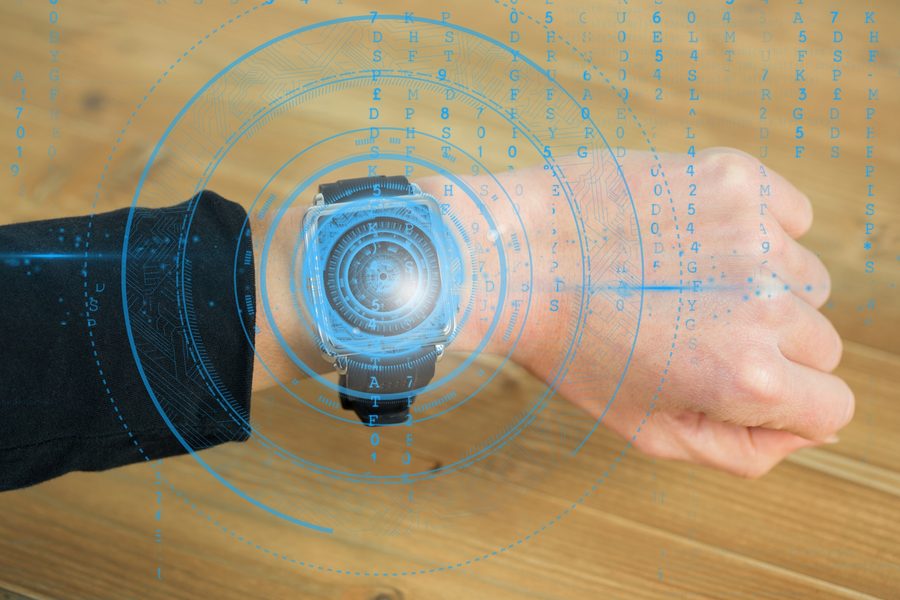
How Do Behavioral Biometrics Detect Fraud in Real Time?
Data collection happens quietly in the background of a payment session. The AI stacks that fresh data against your established pattern almost instantly. Cross a certain anomaly threshold, and the session gets marked high-risk.
Stripe has built integrations with vendors like BioCatch and Feedzai to make this plug-and-play for merchants. Users generally sail through without a re-authentication prompt unless their risk score climbs past whatever line the provider has set. A jump in touch pressure or an odd shift in how fast someone moves through checkout screens can be enough to trigger that secondary step.
The FFIEC has pointed out that continuous authentication fits into a broader risk-based access model, something that matters a lot for digital banking specifically. Still, there’s a catch: none of this should make the experience harder to use, or shut out people whose behavior doesn’t fit neatly into a profile.
How Do Colorado’s Privacy Laws Affect Behavioral Biometrics?
July 1, 2025 marked the date Colorado’s Privacy Act amendments kicked in, requiring explicit consent before any company collects biometric data tied to a financial transaction. Behavioral signals count, even though they’re gathered passively rather than scanned like a fingerprint.
Warning: Providers cannot deny service solely because a user declines biometric consent, unless the data is essential to the transaction. This rule applies to payment authentication, meaning users can opt out but may face higher friction or limits.
What Are the Real Benefits for Colorado Users?
Continuous protection without the repeated login dance is the main draw here. Denver and Boulder residents in particular get to skip a lot of the friction that used to slow down mobile checkout.
Credit unions serving Colorado’s rural stretches have started using low-friction verification specifically to cut down on abandoned transactions, a problem that’s historically hit smaller institutions harder. Trials run with Colorado-based financial institutions have shown false positives dropping by as much as 40%.
One Colorado credit union’s internal review found fraudulent transactions fell 33% after it rolled out AI behavioral systems. Customer complaints about authentication delays? They didn’t budge.
For context: Colorado residents faced $216.5 million in direct fraud losses in 2024, according to FTC Consumer Sentinel Network data compiled by the Common Sense Institute. That’s nearly $18 million per month in losses, money that could have stayed in local pockets or supported small business growth.

What Are the Real Limitations for Users?
These systems need a baseline before they’re accurate, plain and simple. New accounts, or anyone who just switched phones, tend to trip false positives more often.
Models trained mostly on data from urban users with newer phones don’t always translate well to rural Colorado, where slower connections and older hardware are more common. One Denver-based fintech found a 12% false-positive rate among users in La Junta and Grand Junction, noticeably higher than what it saw in Denver metro.
Mimicry attacks are rare but not nonexistent. There have been documented instances, in controlled test environments, of fraudsters using AI to imitate a target’s swipe behavior closely enough to fool early-generation systems. NIST’s SP 800-63B guidance is blunt about this limitation too: behavioral signals carry less certainty about authentication intent than something deliberate like entering a PIN.
Tip: If your payment app suddenly requests extra verification after a device change, check your behavioral profile setup. Re-engaging with the app across multiple sessions can help re-stabilize your baseline.
Related reading: single dad phoenix saved $3,100.
Frequently Asked Questions
How Does Behavioral Biometrics Differ from Traditional Passwords?
Traditional passwords are static and can be stolen without detection. Behavioral biometrics track dynamic actions, like typing cadence or touch pressure, continuously across sessions. This makes it harder for fraudsters to mimic long-term patterns, even if they steal login credentials. According to the Association for Financial Professionals (AFP) 2026 survey, 76% of organizations reported fraud attempts in 2025, underscoring the need for active, adaptive verification.
Can Colorado Users Opt Out of Behavioral Biometrics?
Yes. Under the 2025 Colorado Privacy Act amendments, explicit consent is required before collecting biometric data, including behavioral signals. Users may decline, but providers may apply alternative verification methods or increased friction. Providers cannot deny service outright unless the data is essential to the transaction. This framework aligns with FFIEC guidance on risk-based authentication.
What Is the Financial Impact of Fraud on Colorado Residents?
Colorado residents faced $216.5 million in direct fraud losses in 2024, according to FTC Consumer Sentinel Network data compiled by the Common Sense Institute. This reflects a sharp increase in digital payment fraud, particularly in card-not-present and account takeover incidents.
How Many Fraud Cases Were Reported in Colorado in 2024?
In 2024, Colorado saw 43,302 reported fraud cases, based on data from the FTC Consumer Sentinel Network and analyzed by the Common Sense Institute. This number reflects underreporting, as many incidents go unrecorded.
How Effective Is AI in Stopping Fraud Across the U.S.?
Mastercard reported stopping over $20 billion in fraudulent transactions using AI during the 2023–2024 period, according to industry reports. These systems are increasingly deployed in real-time transaction monitoring, especially in high-risk environments like digital banking and e-commerce.
What Are the Main Challenges for Rural Colorado Users?
Rural users often face higher false-positive rates due to older devices and inconsistent internet connections. These factors distort touch-response timing and data collection accuracy. One Denver-based fintech reported a 12% false-positive rate in La Junta and Grand Junction, well above the 2–4% baseline seen in urban areas, highlighting a persistent digital divide in behavioral AI performance.
How Does Ping Identity Contribute to Payment Security in Colorado?
Headquartered in Denver, Ping Identity acquired Keyless in 2026 to enhance its zero-knowledge behavioral biometrics. The integration enables on-device processing of behavioral data, reducing exposure. Several Colorado-based financial institutions have adopted this stack, improving both security and user experience while complying with state privacy laws.
What Impact Does Behavioral Biometrics Have on False Positives?
Internal benchmarks from Feedzai show that AI-driven behavioral systems reduce false positives by up to 40% compared to legacy rule-based models. This improvement helps reduce customer friction and abandoned transactions, especially in mobile banking and checkout environments where user experience is critical.
Can Behavioral Biometrics Be Faked?
While difficult, mimicry attacks are possible in controlled lab settings. Advanced fraudsters have used AI to replicate swipe patterns closely enough to bypass early systems. However, modern models monitor cumulative behavior over time, making sustained mimicry impractical. NIST’s SP 800-63B guidelines caution that behavioral signals are less reliable than deliberate actions like PIN entry.
What Is the Role of Continuous Authentication in Payment Security?
Continuous authentication monitors user behavior throughout a session, not just at login. This allows systems to detect anomalies, like sudden changes in typing speed or navigation patterns, in real time. It supports a risk-based approach recommended by the FFIEC and aligns with modern fraud prevention strategies in financial services.
| Factor | Urban Colorado (Denver, Boulder) | Rural Colorado (La Junta, Grand Junction) |
|---|---|---|
| False Positive Rate (2026) | 2–4% | 12% |
| Device Age (Average) | 1.5 years | 4.2 years |
| Internet Stability (Reported) | 93% reliable | 68% reliable |
| Behavioral Data Consistency | High | Low |
| Fraud Loss (2024) | $216.5 million | Proportionate share (not separately isolated) |
Sources
- Common Sense Institute: The Impact of Financial Fraud in Colorado (2025), Reports $216.5 million in direct fraud losses and 43,302 reported cases in 2024.
- Aevi: Payment Trends in 2024 and Predictions for 2025 (2026), Confirms Mastercard stopped over $20 billion in fraudulent transactions using AI.
- NIST SP 800-63B: Digital Identity Guidelines (2023), Guidance on the limitations of behavioral biometrics in authentication.
- FFIEC: Authentication and Access to Financial Institution Services (2021), Risk-based access model for digital banking.