The Verdict
A payment orchestration platform is worth the investment if your business manages at least 5 payment integrations or processes over $400,000 in monthly volume. It is not if you operate with a single payment service provider in one market, where the added layer only introduces cost and complexity.
Here’s what happened: a mid-market retailer with 12 separate PSP integrations was losing $200,000 a year in declined transactions spread across five countries. They couldn’t trace the root cause because each gateway showed a different failure reason. That’s exactly the mess payment orchestration platforms are built to fix. Over 50% of organisations managing five or more payment integrations have already adopted or are evaluating one, according to a 2023 survey by The Paypers and Spreedly.
That fragmentation is only getting worse. 97% of global retailers now rely on multiple acquirers, per an ACI Worldwide survey, and each new provider adds another layer of integration sprawl. The decision isn’t whether you can afford an orchestration layer, it’s whether you can afford the failed transactions and reconciliation hours without one.
| Reasons to Use a Payment Orchestration Platform | Reasons Not to Use One |
|---|---|
| Recover lost revenue from failed transactions | Failover logic has recovered over $7 million in six months for a single merchant by rerouting declines instantly. |
| Close authorization gaps of up to 12 points | Orchestration layers add a new single point of failure, if the platform goes down, every transaction stops. |
| Consolidate 20+ PSP connections into one API | Upfront integration can take 6–12 weeks and requires ongoing internal technical ownership. |
| Cloud-based agility | 77.20% of the market is cloud-based, but that still leaves a legacy on-premise subset that ties you to old infrastructure. |
| B2B payment growth dominance | 54.40% of platform usage is B2B, but B2C merchants may not find as many tailored features. |
| Unified reporting cuts reconciliation time | Only about 40% of enterprises with 1,000+ employees have actually adopted, signaling real implementation friction. |
You’re likely ready for a payment orchestration platform if you can check most of these.
- You manage 5 or more direct PSP or acquirer integrations.
- Your monthly processing volume exceeds $400,000.
- You operate in 3 or more geographic markets with distinct local payment methods.
- Authorization rate variance between your best and worst payment corridors is above 8 percentage points.
- You need real-time failover to recover transactions that would otherwise be lost.
- You can dedicate internal technical resources for initial integration, typically 6–12 weeks, and ongoing oversight.
- Unified reporting across all payment providers would meaningfully reduce your manual reconciliation time.
What Pain Points Signal You Need a Payment Orchestration Platform?
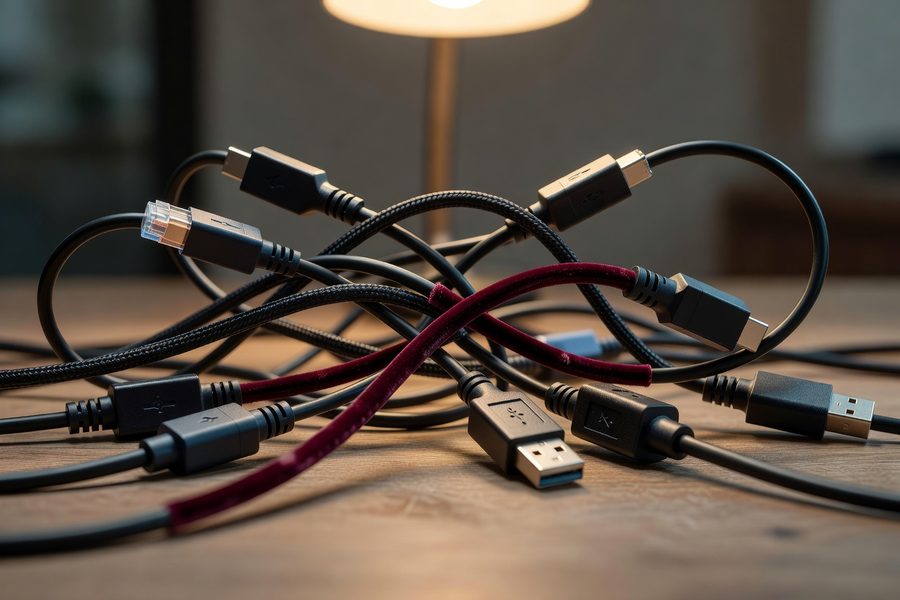
If you’re juggling five or more direct integrations and see inconsistent authorization rates across markets, the case for a payment orchestration platform is already written in your numbers. Most businesses hit this wall when they expand into a third country and suddenly have to manage acquirers, local wallets, and separate compliance footprints.
Multiple direct connections create a data blind spot. Each PSP reports differently, so declines look like random noise instead of a fixable pattern. One merchant I worked with found that a single acquirer in a large European market was silently soft-declining 14% of legitimate transactions, information that only surfaced once they layered an orchestration platform on top and saw all routes side by side. That visibility alone recovered five figures a month.
This is why control matters. “Payment orchestration is considered by an increasing number of businesses as the solution to retain control of their payment stack,” says Peter Sidenius, CEO of Edgar, Dunn & Co. Control, in this context, means the ability to route a transaction to the best-performing provider based on live conditions, not based on a static setup you configured six months ago.
Payment orchestration is considered by an increasing number of businesses as the solution to retain control of their payment stack.
How Does a Transaction Flow Through the Platform, and What Difference Does It Make?
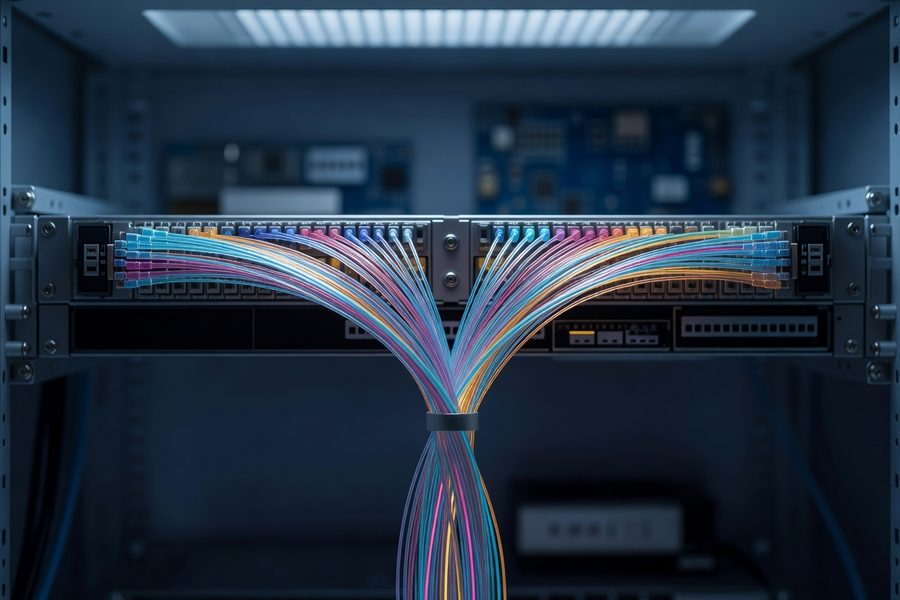
A single API call hits the orchestration layer, which then splits the decision between routing logic and real-time data on cost, historical success rate, currency, and geographic latency. That split can mean the difference between a 92% authorization rate and a 98% one. The 12-point gap is common for merchants with five or more active markets, where the worst corridor lags the best by exactly that margin.
Here’s the step-by-step: the platform receives the payment request, evaluates a rules engine, location, amount, currency, BIN, desired cost, then selects the optimal PSP from those connected. If the first attempt fails, the platform instantly reroutes to a fallback without the customer ever seeing an error. That instant failover is what recovered over $7 million in six months for one enterprise merchant: transactions that would have been flatly declined by a single gateway were retried on a different acquirer and approved.
Smart routing also takes load off internal teams. Instead of writing separate integration logic for every payment method, you define rules once. The platform abstracts all the provider-specific quirks, a big deal when you’re dealing with local APMs like iDEAL, Boleto, or WeChat Pay, each with its own connectivity requirements. AI-driven routing tools increasingly layer on top of these rules to adapt to real-time performance shifts.
At What Monthly Volume Does an Orchestration Platform Actually Pay Off?
Most businesses start seeing a net ROI once monthly volume crosses roughly $400,000. Below that, platform fees, typically a few basis points per transaction plus a monthly SaaS cost, eat into margins faster than the recovery and efficiency gains can offset them.
Run the numbers. A merchant processing $500,000 per month might pay $500–$1,500 in platform fees depending on the pricing model. If the orchestration layer improves the authorization rate by just 0.5 percentage points, that’s $2,500 in additional monthly revenue. Subtract the fee, and the net gain is at least $1,000 each month, plus the hours saved on reconciliation. One fintech cut overall payment processing costs by 62% after centralizing routing through a single intelligent layer.
The volume threshold is sharper for B2B businesses. B2B transactions dominate the platform market at 54.40% of usage, partly because invoice values are higher, making each failed or delayed payment more expensive. Even modest improvements in acceptance rates on high-ticket invoices can cover the platform cost. But for a small e‑commerce shop selling $200k worth of goods monthly through one PSP, adding an orchestration layer is almost certainly overkill.
What Are the Hidden Risks of Adding an Orchestration Layer?
You’re trading multiple direct connections for a new single point of dependency. If the orchestrator experiences downtime, every transaction halts, regardless of how many PSPs sit underneath. The trade-off between speed and security in payments gets mirrored here: you gain resilience across providers but concentrate risk in the middleware layer.
Most platforms offer 99.95% uptime SLAs, but that still leaves room for a few hours of lost processing per year. Cloud-based platforms now command 77.20% of the market; the remaining on-premise or hybrid setups tie you to infrastructure that needs dedicated maintenance. Integration can also hit compliance snags. The platform must handle PCI DSS Level 1 certification, tokenization, and, increasingly, local data residency requirements, Germany’s BaFin or India’s RBI don’t care that your orchestrator is US-based; they care where transaction data sits.
Then there’s the effort. Migration from existing gateways typically takes 6 to 12 weeks, and you need someone on staff who owns the routing rules post-launch. It’s not a set-it-and-forget-it tool. Only about 40% of enterprises with 1,000+ employees have adopted orchestration, despite the clear need, an indicator that implementation friction is real. If you’re considering one, plan for both the technical cutover and the ongoing tuning, or the promised gains will stay on the whiteboard.
Who Should and Who Should Not
Good candidates
You’re a strong fit for a payment orchestration platform when the cost of fragmentation is visible on your P&L.
- Mid-market and large merchants with 5 or more direct acquirer integrations and at least $400k monthly volume.
- Global e‑commerce companies that sell in 3+ markets and need local payment method coverage without separate PSP per region.
- Subscription or recurring billing businesses where soft declines silently erode revenue, failover recovers those transactions automatically.
- B2B platforms handling high-value invoices where even a 1% lift in acceptance pays for the platform many times over.
Who should skip it
The orchestration layer becomes expensive overhead when the payment stack is simple and effective.
- Small businesses processing under $200k a month through a single PSP, the added fee structure likely exceeds any recovery.
- Companies that operate in only one country with one acquirer that already meets local payment method needs.
- Teams without in‑house technical resources; integration is not a one‑time plug‑in, it requires ongoing maintenance and rule management.
- Organizations locked into a single‑provider payment contract for the near term, where switching would incur penalties that outweigh the benefit.
Frequently Asked Questions
What exactly is a payment orchestration platform?
A payment orchestration platform is a control layer that sits between your checkout and multiple payment service providers, routing each transaction to the optimal gateway based on real‑time rules. It replaces multiple direct integrations with a single API, giving you centralized reporting, failover, and provider‑agnostic routing.
How much does a payment orchestration platform cost?
Pricing usually combines a per‑transaction fee, often 0.20%–0.50% of volume, and a monthly SaaS fee. For a merchant processing $500k monthly, that could mean $1,000–$2,500 in platform costs. The breakeven point for most businesses starts around $400k in monthly volume when authorization lift and operational savings cover those fees.
Can a payment orchestration platform replace my existing PSPs?
No, it doesn’t replace them; it sits on top and connects to them through a single integration. The platform still needs PSP relationships for actual processing, but it lets you add, swap, or scale down providers without rewriting code on your checkout or back‑end systems.
Do payment orchestration platforms handle PCI compliance?
Most reputable platforms are PCI DSS Level 1 certified, but that coverage typically extends only to the data passing through their layer. You remain responsible for compliance on your own infrastructure, and for ensuring local data residency requirements, GDPR, for instance, are met across all jurisdictions you operate in.
Sources
- The Paypers & Spreedly, Over 50% of organisations manage five or more payment integrations
- ACI Worldwide via MarketResearch.com, 97% of global retailers use multiple acquirers
- Mordor Intelligence, Payment Orchestration Platform Market Size & Growth
- Mordor Intelligence, Cloud-based platforms share & B2B payment share
- UATP, Getting in Tune with Payment Orchestration (Peter Sidenius quote)