
Quick Answer
For routine budgeting and quick calculations, AI chatbots financial advice works, 66% of Americans have already tried it. But for retirement planning, complex tax situations, or any decision where a legal obligation to act in your best interest matters, a human fiduciary advisor is still the better choice. Most people end up using a hybrid approach, AI for prep, a human for decisions.
How We Chose
We evaluated six distinct sources of financial advice: AI chatbots (ChatGPT, Google Gemini, Microsoft Copilot), robo-advisors, fee-only planners, hybrid human-digital services, and AI-augmented budgeting apps. Each was scored on cost, trustworthiness (user trust surveys, CFPB guidance), regulatory accountability, personalization depth, and real-world performance data. Sources included the 2024 National Financial Capability Study, FINRA’s regulatory notice on generative AI, the CFPB’s chatbot research, Morningstar fee data, and a 2025 LendingTree survey. All numbers were verified as current through December 2025.
AI chatbots financial advice is no longer a novelty. It’s a daily habit for tens of millions. A 2025 Intuit Credit Karma survey found 66% of Americans have used AI to seek out financial advice, according to the report. What was once a whisper in tech circles has turned into a full-throated conversation, people are asking ChatGPT how to save for a house, whether to roll over a 401(k), and even how to pick a health insurance plan.
But the question that matters is not how many people are using AI for money questions. It’s whether the advice they’re getting is any good. When we stacked up AI chatbots against human financial advisors, one factor towered over the rest: fiduciary duty. An advisor who is legally bound to put your interests first is a very different instrument from a language model that predicts the next plausible word. That distinction runs through every comparison that follows.
Why Millions Are Turning to AI Chatbots for Money Questions Right Now
Pull out a phone and type “how should I invest $5,000 right now” into any large language model. You’ll get a multi-paragraph answer in seconds, no appointment, no sales pitch, no fee. That frictionless experience is what’s fueling the massive adoption. In a 2025 LendingTree survey, 49% of AI chatbot users said AI had already influenced at least one of their financial decisions. That’s nearly half of users.
The appeal is clearest in the gaps traditional advice leaves behind. The median age of a human financial advisor’s client is north of 50, and many require minimum investable assets of $100,000 or more. AI chatbots have no minimums. For someone just starting to build savings, or trying to pay down credit card debt, a chatbot feels like the only accessible option.
Usage patterns bear this out. Young adults are overrepresented. The Financial Planning Association’s analysis of the 2024 National Financial Capability Study pegged interest in AI-based financial advice at 23% of consumers overall, with higher numbers among those under 35. It’s not just interest; it’s action. When people need to decide between an AI expense tracker and an accountant, the free instant answer often wins the first round.
What AI Chatbots Actually Get Right on Budgeting, Investing, and Planning
AI chatbots are strongest where the financial task is essentially computational. Ask “how much will I save if I cut $200 a month and earn 6% over 20 years,” and you’ll get a precise number with the formula shown. That’s a straightforward time-value-of-money calculation a human advisor would plug into a calculator. AI does it faster and instantly explains the assumptions.
Budgeting categories and spending analysis are another bright spot. Connect an AI-enhanced tool like Copilot Money or Monarch, and you’ll have recurring subscriptions flagged, oversized categories surfaced, and spending trends predicted, often more thoroughly than a rushed human review. The machine doesn’t get tired, doesn’t miss patterns, and doesn’t judge you.
General financial education is where chatbots truly shine. Explanation of Roth vs. traditional IRAs, the mechanics of a backdoor Roth, how mortgage amortization works, these are data-synthesis tasks. The AI pulls from publicly available knowledge and repackages it in plain language. It’s like having a patient, infinitely knowledgeable tutor who works at 2 a.m.
Some platforms are adding account-linking capabilities, allowing models like ChatGPT to ground its answers in your current balances and spending patterns. This makes the advice feel more personalized. But even with that, a critical caveat hangs in the air: the AI is not acting as a fiduciary, and the platform’s own disclaimers remind you of that every time.

The Hard Limits of AI Chatbots Financial Advice
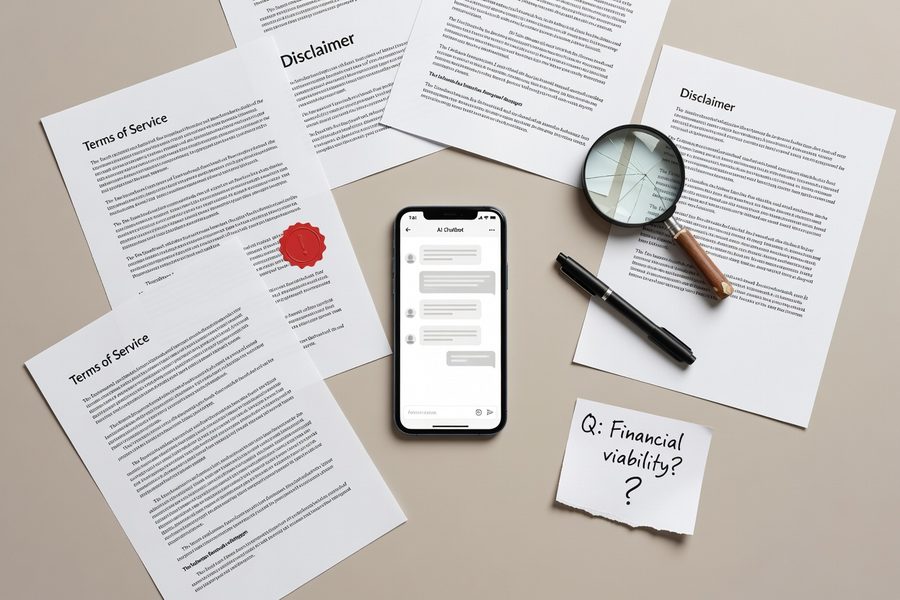
Here’s where the glossy promise cracks. AI chatbots financial advice has no enforceable duty of care. An algorithm that generates an answer about your retirement asset allocation isn’t bound by the Investment Advisers Act of 1940. If it tells you something wrong, and it will, there’s no regulatory body to hold accountable, no errors-and-omissions insurance to cover the loss.
Hallucination is a real and documented problem. Language models can fabricate citations, invent tax code provisions, and confidently assert false information. When a user asks “should I contribute to a Roth IRA if I’m in the 32% bracket with a traditional 401(k) maxed out,” the AI may generate a plausible-sounding answer that ignores the five-year rule on Roth conversions or misstates the income phaseout range. A human advisor who made that mistake could lose their license.
Then there’s the emotional dimension. Money is not a spreadsheet. A 2025 LendingTree survey found that while many people experiment with AI for finances, trust lags sharply. Most participants still preferred a human for complex or emotionally charged decisions, retirement, divorce settlements, planning after a death. AI doesn’t know you’re scared. It can’t read the hesitation in your voice when you’re about to make a mistake born of fear.
CFPB Director Rohit Chopra has put it bluntly: financial institutions that deploy chatbot technology risk “violating legal obligations, eroding customer trust, and causing consumer harm” if those chatbots give inaccurate or incomplete information. The CFPB’s research flagged multiple instances where chatbots provided information that would violate consumer financial law if delivered by a human.
Where Human Financial Advisors Still Deliver Clear Advantages
A fiduciary human advisor isn’t just a knowledge base. She carries legal liability. She has a Series 65 or 66 license, a continuing education requirement, and a compliance department reviewing her recommendations. When she tells you something, she’s putting her entire professional standing behind it. That structural difference cannot be overstated.
Personalization is the second moat. A good advisor knows your sibling leeches money, knows you panic-sold during the 2020 crash, knows your spouse hates risk. They adjust not just the math but the communication. No AI currently can replicate that depth of relational understanding across years of meetings, even with memory features.
Behavioral coaching, literally preventing clients from selling at the bottom, is the single most valuable thing an advisor does, according to Vanguard’s research. They’ve estimated that behavioral coaching adds about 1.5% in annual returns, net of fees, for the typical client. A chatbot doesn’t call you when the market drops 20% in a week. It doesn’t even know the market dropped unless you ask.
Older Americans, in particular, show a clear preference for humans. Retirees using AI for income planning often supplement the digital output with a real conversation, they treat the machine’s answer as one input, not the final word. Hybrid models are where the market is heading.
Head-to-Head: Real Costs, Outcomes, and Trust Levels
Cost is the simplest dimension to measure. A robo-advisor’s median annual fee is 0.25% of assets, according to Morningstar’s 2024 data. That’s the benchmark. A human advisor typically charges around 1% of assets under management per year. On a $50,000 portfolio, that’s $125 per year for the robo versus $500 for the human, a $375 annual difference. For smaller portfolios, the human cost advantage evaporates quickly, which is why many first-time investors under $10,000 choose automated solutions.
Trust, though, runs the opposite direction. Across multiple surveys, including the LendingTree 2025 study, roughly 56% or more of respondents still preferred a human advisor for decisions involving retirement, large lump sums, or estate planning. Only about 10-13% said they trusted AI more than a human for financial advice. These numbers haven’t moved much in the last year, even as AI usage has soared. People sample the free option, but they keep the expensive one for the big decisions.
Outcome data is harder to pin down. There are no long-term, independently tracked studies that follow people who exclusively take AI financial advice over a decade. Anecdotal evidence of costly mistakes exists, a misreported tax rule, an LLM hallucination about annuity surrender charges, but systematic outcome tracking is still absent. That absence of evidence is itself a risk.
When you compare the regulatory frameworks directly, the gap is stark. FINRA’s 2024 notice made clear that member firms using generative AI for customer communications remain fully on the hook for compliance with all applicable rules, including suitability and supervision. An independent AI chatbot answering a retail investor’s question doesn’t even fall under that umbrella. There’s no FINRA registration, no audit trail, and no binding “know your customer” requirement.

The Hybrid Path Most People Actually Want and How to Make It Work
Survey after survey points to the same conclusion: people don’t want to choose between AI and a human. They want both. The dominant preference is a hybrid model where AI handles routine tasks, aggregation, categorization, initial recommendations, and a human advisor reviews, clarifies, and takes responsibility for the final decision.
This is already happening in practice. Vanguard’s Personal Advisor service blends automated portfolio management with human advisor access for a combined fee of roughly 0.30% of assets. Schwab Intelligent Portfolios Premium pairs a robo core with unlimited guidance from a CFP for a one-time planning fee plus a subscription. The human is there when you need them; the algorithm runs the rest of the time.
For someone without a dedicated advisor, the practical hybrid looks like this: Use an AI chatbot or an AI-enhanced budgeting app to get organized, track cash flow, model scenarios, research general questions. Then, before making a move that has irreversible consequences (rolling over a 401(k) to an IRA, buying an annuity, restructuring debt), pay for one hour with a fee-only fiduciary planner. The AI prepares; the human decides. You’ve just bought the best of both for a few hundred dollars.
This approach also sidesteps the biggest risk: over-relying on a machine that can’t be held accountable. When you weigh when to trust human advisors versus AI, the answer isn’t either/or. It’s sequential: AI first for data, human last for judgment.
A Quick Reality Check on AI Advice Liability
If a ChatGPT answer causes you to make a retirement account mistake that triggers a $7,000 tax bill, there’s no legal recourse. OpenAI’s terms of service explicitly disclaim that its outputs are not financial advice. The same is true for Google and Microsoft. This isn’t a fine-print quirk; it’s a foundational design feature. An AI model is not a regulated entity.
Even when a platform connects to your financial accounts and presents personalized-looking suggestions, the legal disclaimer remains. Until Congress or a regulator classifies certain AI-generated financial recommendations as “advice” subject to the Advisers Act, the liability gap will persist. The CFPB has signaled it’s watching closely, but, no binding rule requires an AI to act in your best interest.
The Top Picks: Best Advice Sources for Each Financial Need
| Method | Best For | Key Metric |
|---|---|---|
| AI Chatbot (ChatGPT, Gemini) | Quick budgeting, financial literacy | Free or $20/month |
| Robo-Advisor (Betterment, Wealthfront) | Automated low-cost investing | 0.25% median annual fee |
| Human Fiduciary Advisor | Retirement planning, complex wealth | ~1% AUM; 56%+ trust level |
| Hybrid Service (Vanguard, Schwab) | Human touch with low fees | ~0.30% AUM + human access |
| Fee-Only Planner | One-time comprehensive plan | $1,500–$2,500 flat |
| AI-Enhanced Budgeting App | Tailored expense tracking | $8–$13/month |
Real-World Example: AI Chatbot, Best for Quick Budgeting and General Education
Maria, a 24-year-old with her first full-time job, needs to understand how a Roth IRA works and which of her monthly subscriptions she can cut. She types the questions into ChatGPT. In under 30 seconds, she has a clear explanation of contribution limits, income phaseouts, and a categorized list of recurring charges pulled from her linked bank data. The information is accurate for general purposes, the IRS rule the AI cited checks out. She’s now better equipped to open an IRA. Cost: free. The key numbers: no fee, immediate response, educational value high. Best for: new earners, anyone with simple “how-to” questions, and those unwilling to pay for an advisor. Watch out for: The AI can’t catch a nuance like whether she’s covered by a workplace plan, which could make her ineligible to deduct a traditional IRA contribution, that’s a detail she’d have to verify herself.
Real-World Example: Robo-Advisor, Best for Low-Cost Automated Investing
Derek has $12,000 to invest and doesn’t want to pick stocks. He opens a Betterment account. The platform assesses his risk tolerance through a short questionnaire, then builds a globally diversified ETF portfolio. The median robo-advisor fee is 0.25% of assets, per Morningstar’s 2024 analysis, which means Derek pays about $30 in his first year. Tax-loss harvesting is included automatically. Best for: hands-off investors, those with accounts under $100,000 where human advisor fees feel punitive, and anyone comfortable with a purely digital interface. Watch out for: No behavioral coaching when the market drops 20%. The app sends a rebalancing alert, but won’t talk you out of panic-selling.
Real-World Example: Human Fiduciary Advisor, Best for Retirement Planning and Complex Wealth
Janet and Tom, both 58, have $850,000 spread across multiple 401(k)s, an IRA, and a taxable account. They want to retire at 65 but worry about sequence-of-returns risk and tax-efficient withdrawal strategies. Their fiduciary advisor, a CFP at a registered investment advisory firm, builds a personalized plan, stress-tests it against historical market scenarios, and sits with them through two hours of discussion. The advisor charges 1% AUM, about $8,500 per year. In return, they get ongoing monitoring, tax coordination with their CPA, and a legally enforceable duty of care. Best for: anyone nearing retirement, navigating divorce settlements, managing an inheritance, or facing a decision too large to absorb alone. Watch out for: The fee is real. On a growing portfolio, 1% compounds into a significant cost over decades.
Real-World Example: Hybrid Service, Best for Combining Human Oversight with Low Fees
Amir, 34, wants professional help but balks at a 1% fee. He enrolls in Vanguard Personal Advisor, which charges roughly 0.30% of assets, including a dedicated human advisor. The platform automatically rebalances his index fund portfolio and the advisor jumps on a video call for the annual review or whenever Amir has a life-change question. The blended model gives him a named point of contact, someone who knows his long-term goals, while keeping costs low. Best for: mid-career professionals accumulating assets, people who want a human safety net without paying full freight, and anyone comfortable with digital tools but needing occasional professional guidance. Watch out for: The human advisor’s time is limited compared to a full-service relationship; you won’t get the same depth of estate planning or small-business consulting that a dedicated 1% AUM advisor provides.
Real-World Example: Fee-Only Planner, Best for a One-Time Comprehensive Plan
Lena inherited $80,000 and wants to know whether to pay off her mortgage, invest it, or split the difference. She hires a fee-only CFP for a flat engagement. The planner produces a 30-page financial plan, reviews her insurance coverage, models different mortgage payoff scenarios, and hands her a concrete action list, all for a one-time fee of $2,000. There’s no asset management relationship and no ongoing fee. Lena walks away with a roadmap. Best for: people with a single complex decision, those who don’t want ongoing management, and anyone who needs an outsider’s analytical eye without an enduring cost commitment. Watch out for: Implementation is entirely on you. If the plan recommends rolling over a 401(k) and you miss a 60-day deadline, the tax consequences are yours alone.
Real-World Example: AI-Enhanced Budgeting App, Best for Tailored Expense Tracking and Cash Flow
Sam and Jordan, a couple with joint finances, connect Copilot Money to both their bank accounts. The app uses AI to auto-categorize every transaction, flag duplicate subscriptions, and project their monthly surplus. They see exactly where their money is going without spending Sunday afternoons in a spreadsheet. Subscription cost: $13 per month. Best for: couples managing shared expenses, freelancers with variable income, and anyone whose primary need is visibility into spending rather than investment advice. Watch out for: The AI’s labeling isn’t perfect, it may misclassify a Costco run as “groceries” when half the total was home goods. You’ll still need to review the categories occasionally.
The hybrid approach, AI for budgeting and prep, a fee-only fiduciary for the final call, gives you the highest ratio of useful advice per dollar spent. Start there. You can always upgrade to full-service human management later, but the reverse is harder.
How to Choose the Right Financial Advice Source for You
Start with the complexity of your situation. If all you need is a budget and a basic investment allocation, a robo-advisor or AI-enhanced app gets the job done at negligible cost. If you’re within ten years of retirement, own a business, or have a blended family, a human fiduciary probably saves you more in tax and behavioral mistakes than their fee costs.
Ask yourself these three questions:
- How much is at stake? For a $5,000 Roth IRA contribution, the cost of a mistake is manageable, AI can probably get you there. For a $500,000 401(k) rollover, the tax consequences of an error can run into tens of thousands. That’s human territory.
- Do I need ongoing accountability? If you’re prone to tinkering or panic-selling, behavioral coaching from a human advisor can be worth far more than the fee. No chatbot provides that service.
- Am I comfortable verifying AI output? If you can’t double-check a tax-related claim against the IRS website or a trusted source, then the liability-free nature of AI makes it a risky primary advisor.
We don’t have any guardrails yet in terms of how large language models are able to provide advice to consumers.
Related reading: The Hidden Risks of AI.
Frequently Asked Questions
Can AI give fiduciary financial advice?
No., AI chatbots are not registered investment advisers and are not bound by the fiduciary standard under the Investment Advisers Act of 1940. They cannot legally act in your best interest.
What is the best AI chatbot for financial advice right now?
For general education, ChatGPT and Google Gemini perform similarly well, both can explain investment concepts and do retirement math. But none are authoritative sources. Always verify the output against an IRS publication or a CFP.
How much does a human financial advisor cost compared to an AI tool?
A human fiduciary advisor typically charges about 1% of assets annually, while a robo-advisor’s median fee is 0.25%. AI chatbots and basic budgeting apps cost little to nothing, but they don’t replace a professional’s regulatory accountability.
Are AI chatbots safe for sensitive financial data?
It depends on the platform. Most consumer-facing chatbots store conversation data and may use it for training unless you opt out. Never share account numbers, Social Security numbers, or brokerage login credentials with an AI chatbot.
Do financial advisors use AI themselves?
Yes, many advisors are integrating AI tools for portfolio analysis, note-taking, and client communication drafting, as retirees using AI for income planning increasingly encounter AI-augmented service. But the human remains the decision-maker and bears the legal responsibility.
What do regulators say about AI giving financial advice?
The CFPB warns that financial institutions risk violating consumer protection laws if chatbots give inaccurate information. FINRA reminded firms in 2024 that all AI-generated customer communications must comply with existing rules on suitability and supervision.
Has anyone lost money following AI financial advice?
Yes. While no comprehensive database exists, documented cases include AI hallucinating tax rules that led to incorrect IRA contributions and fabricated state-specific estate tax thresholds. The absence of a financial safety net means the loss is the user’s.
Is a robo-advisor the same as an AI financial advisor?
Not exactly. Robo-advisors use algorithms to build and rebalance portfolios based on modern portfolio theory. They don’t use large language models to generate free-form advice. They are regulated, provide automated investment management, and are generally lower-risk than a generative AI chatbot.
Will AI replace human financial advisors?
It’s already replacing parts of their workflow, but Michael Donnelly of the CFP Board noted that advisors who refuse to adopt technology are the ones at risk of being replaced. The more likely future is a hybrid model where AI handles routine analysis and humans provide emotional and fiduciary oversight.
What percentage of people trust AI for financial decisions?
About 10-13% of respondents in multiple 2025 surveys trust AI more than a human for financial advice. The majority still prefer a human, especially for retirement and estate planning decisions.
Sources
- Intuit Credit Karma, More People Turning to AI Chatbots for Financial Advice
- LendingTree, AI Chatbot Users Survey 2025
- Financial Planning Association/National Financial Capability Study, Interest in AI-Based Financial Advice (2024)
- Morningstar, Best Robo-Advisors (2024 Median Fee Data)
- Consumer Financial Protection Bureau, Chatbots in Consumer Finance
- FINRA Regulatory Notice 24-09, Generative AI and Large Language Models
- Fortune, AI ChatGPT vs. Financial Advisors: Which Is Better? (Andrew Lo quote)
- Fortune, Michael Donnelly, CFP Board, on Advisors and Technology
- Vanguard, Advisor’s Alpha Research (Behavioral Coaching Value)
- Betterment, Robo-Advisor Service Details
- Copilot Money, AI-Enhanced Budgeting App






