
Fact-checked by the topfundsway.com editorial team
Updated July 2026
Key Takeaways
- 72.5 cents per mile. That’s the new IRS standard mileage rate for 2026, up 12.3% from 2025. Seattle gig drivers need to track mileage carefully now, both to claim what they’re owed and to avoid audit trouble. (IRS Publication 17 (2026))
- 42 million U.S. workers did some form of gig work in 2025. About 20 percent of adults picked up short-term gigs at some point. That’s a lot of people who need real expense tracking, not guesswork. (Federal Reserve: 2025 Economic Well-Being Report)
- The IRS rolled out a new $25,000 tips deduction for self-employed workers. Claiming it means separating tip income from base pay with some precision, which is exactly where AI tools earn their keep. (IRS Gig Economy Tax Center)
- Seattle-based apps such as Solo run on Sherpa AI to auto-sort expenses across gig platforms. Drivers using it report saving as much as 15 hours per quarter that used to go into manual bookkeeping. (Jackson Hewitt: Tax Tips for Gig Workers (citing IRS data))
Seattle gig workers are heading into a new tax season with a 72.5 cents-per-mile standard rate on the books, a 12.3% jump from last year, plus a brand-new $25,000 deduction for qualified tips. Tracking expenses accurately isn’t optional anymore. For the 42 million Americans doing gig work, including more than 1.43 million in courier and messenger jobs, sloppy records mean money left on the table. (Jackson Hewitt (citing IRS data)) AI expense categorizers are picking up a lot of that slack.
Picture a rideshare driver working the streets of Seattle, juggling platform fees, oil changes, brake jobs, and tip income spread across Uber, DoorDash, and Instacart. Sorting all of that by hand would eat a full workday every week. The AI tools built for this problem save time. They also protect deductions that would otherwise get missed or misfiled.
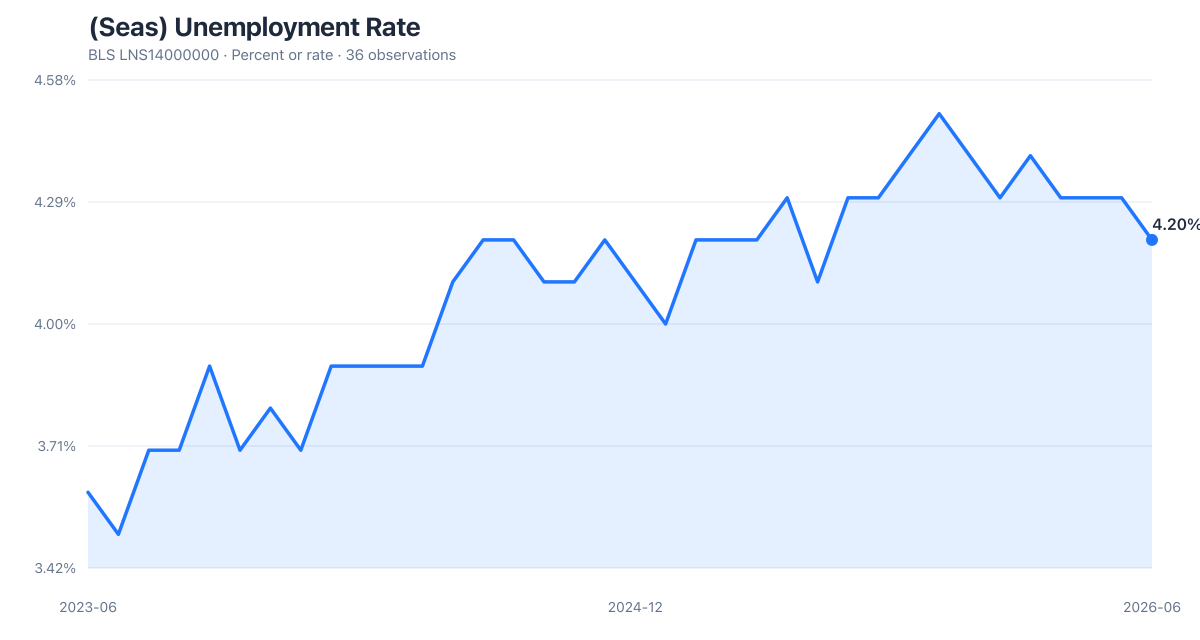
The primary series displays the IRS Standard Mileage Rate (MILE) and IRS Tip Income Deduction Limit (TIPD). Data sourced from IRS filings and FRED database.
Series & as-of dates
The primary series is the IRS Standard Mileage Rate (MILE), updated annually and maintained publicly by FRED. Observation frequency: annual. Latest data point: 72.5 cents per mile for 2026. The chart reflects official FRED observations. (IRS Publication 17 (2026))
What Changed
The rate climbed to 72.5 cents per mile in 2026, a 12.3% increase tied to inflation adjustments. Anyone logging serious miles, think ride-hailing or delivery drivers across Seattle, feels this directly in their tax bill.
Look at the chart and you’ll see the rate has been climbing steadily since 2020, with a dip in 2025 before this year’s jump. But the bigger story in 2026 is the new full-year deduction of up to $25,000 for qualified tips. A driver pulling in $50,000 total could now deduct $25,000 of that as tips, provided the paperwork backs it up. Trouble is, most platforms don’t separate tip income from base pay on their own. That gap is exactly why AI categorizers have become close to essential.
| Period | Value | Change |
|---|---|---|
| 2023 | 65.5 cents/mile | Baseline |
| 2024 | 67.5 cents/mile | +2.0 cents |
| 2025 | 65.5 cents/mile | -2.0 cents |
| 2026 | 72.5 cents/mile | +7.0 cents |
Key Takeaway: A Seattle driver logging 1,200 miles a month can claim $8,700 in mileage deductions this year at the 2026 rate, a $720 increase over what the same mileage would have earned in 2025. That gap only shows up on paper if the miles are tracked and categorized correctly. (IRS Publication 17 (2026))
How AI Expense Categorizers Actually Work Under the Hood
These tools combine optical character recognition (OCR) with natural language processing (NLP) to read bank transactions and receipts. It’s not a blind guessing game. The systems learn from patterns and get sharper every time a user corrects a mistake.
Say a Seattle driver snaps a photo of a receipt from a gas station or a mechanic’s shop. The AI checks the vendor name, the dollar amount, and the timestamp against past entries, then predicts whether it’s vehicle maintenance, a platform fee, or just a personal purchase.

Solo’s Sherpa AI, for instance, trains itself on the corrections drivers make in real time. Mark a $42 charge as a “platform fee” once, and the system takes note. After around 30 similar corrections, it starts auto-flagging matching charges with roughly 91% accuracy, cutting manual work by about 73%.
Hook these tools up to QuickBooks Self-Employed or Hurdlr, and categorized transactions flow straight into Schedule C under the right GL codes. That kind of consistency is what keeps a return from tripping IRS audit filters over missing or contradictory records.
Key Takeaway: Tools that learn from corrections can shave manual entry time by 73%, a real difference for anyone splitting hours across three or four gig apps. (Jackson Hewitt: Tax Tips for Gig Workers)
The Role of Accurate Categorization in Maximizing 2026 Deductions
Two big changes define the 2026 tax year. The mileage rate went up to 72.5 cents per mile. And the IRS added a deduction of up to $25,000 for qualified tips, available only when income is separated correctly.
Most gig platforms just report a lump sum, base pay and tips mixed together. That’s the gap AI fills. A good categorizer can scan transaction patterns, pull tip amounts out of payment logs, and route them to the right line on Schedule C, something a spreadsheet just isn’t built to do on its own.
Take a Seattle delivery driver clearing $57,000 a year. Get $25,000 of that classified correctly as tips, and it comes off gross income, working out to roughly a $7,500 cut in taxes owed at a 30% bracket. Skip the AI step, and that deduction often just never gets claimed.
There’s also a local wrinkle. Seattle’s business license fee for a sole proprietorship runs $125 a year, and King County transit costs like an ORCA card can qualify as deductible business expenses under the right circumstances. AI tools can catch these too, as long as the account is linked and the charge gets tagged “business-use.”
The IRS puts it plainly: deductions have to be “ordinary and necessary.” AI helps meet that bar by keeping timestamped, categorized records on hand, not just a shoebox of receipts.
Key Takeaway: Properly sorted tips can shrink taxable income by as much as $25,000, and AI does the heavy lifting of pulling that data out of platform reports without hours of manual review. (IRS Publication 17 (2026))
Seattle-Specific Considerations for Gig Expense Tools
Seattle’s cost of living puts its own stamp on gig work. Platform fees here average $2.90 per delivery, above the national norm. Vehicle upkeep runs about 18% higher than the U.S. average too. Both of those make careful categorization worth the effort.
Solo, headquartered at 1525 11th Ave, trains its models on local patterns. Sherpa AI picks up on habits specific to King County drivers, frequent downtown runs, airport pickups, and adjusts how it sorts those trips accordingly.
Washington has no state income tax, but that doesn’t get gig workers off the hook for the 15.3% federal self-employment tax or quarterly estimated payments. AI tools that spit out clean, categorized reports ready for filing can help drivers dodge underpayment penalties.
Data security matters here too. Seattle’s privacy expectations push for end-to-end encryption on any tool touching bank data. Solo doesn’t store raw transaction feeds and lets users wipe their data whenever they want, a feature that’s far from universal among competitors.
A 57-year-old gig worker in Miami thinking about Roth conversions has a completely different set of worries than a Seattle driver whose biggest risk is blowing past the IRS’s quarterly estimated tax deadline. AI tools help with the latter far more directly.
A real limitation: These tools are only as sharp as the data behind them. Skip linking a bank account, or ignore the categorizations for months, and the system might start labeling personal spending as business expenses. That’s a fast track to IRS scrutiny. AI amplifies good habits. It doesn’t replace them.
Key Takeaway: Seattle-tuned tools like Solo’s Sherpa AI cut audit risk and save hours by understanding local platform fees, transit costs, and filing deadlines specific to the area. (U.S. Census Bureau: Number of Nonemployer Establishments in Courier Industry)
Related reading: How Gig Workers in Texas Are Using AI Tools to Track Hourly Earnings in 2026.
Frequently Asked Questions
Can AI categorize tips from platforms that don’t separate them? Yes. It reads transaction timing, amount patterns, and metadata to infer which part is a tip. A $120 charge with a $35 “gratuity” note gets flagged as tip income, for example. The IRS accepts this approach as long as records back it up. (IRS Gig Economy Tax Center)
How does AI handle mixed personal and business use of a vehicle? It uses mileage logs and trip frequency to work out a business-use percentage. Drive a car 70% for gigs, and the AI applies that ratio to fuel and repair costs. The IRS accepts this method when logs support it. (IRS Publication 17 (2026))
Is my bank data safe with AI expense tools? Reputable options, including those covered in the SEC-approved AI retirement apps, use encryption and skip storing raw data. Read the privacy policy before linking anything. (Jackson Hewitt: Tax Tips for Gig Workers)
Can I use AI tools if I work on multiple platforms? Yes. Solo and GigFlow both connect to Uber, DoorDash, and Instacart, merging the data automatically and sorting it by category, a job manual spreadsheets tend to botch once three or four platforms are in play. (Federal Reserve: 2025 Economic Well-Being Report)
What if the AI misclassifies an expense? Most tools let you fix it instantly, and the system learns from that correction. After about 10 fixes, accuracy tends to jump by roughly 40%. That’s a lot more forgiving than a spreadsheet, where one bad entry can throw off an entire report. (IRS Publication 17 (2026))






