
Verdict at a Glance
Centralized identity verification wins for most fintechs today because it delivers 90%+ first-pass rates with mature KYC/AML compliance built in; choose decentralized identity (SSI) instead if you onboard users across 3 or more jurisdictions where conflicting privacy regulations make centralized data storage a liability rather than a feature.
Every fintech signup triggers a digital identity verification sequence that most users never see. The screen asks for a name, a date of birth, maybe a photo of a driver’s license, and then, in under 60 seconds, an approval or denial arrives. Behind that moment sits a sprawling infrastructure of document scanners, facial recognition algorithms, device fingerprinting scripts, and database cross-checks. Digital identity verification fintech systems processed an estimated 70 billion checks globally in 2024, according to Juniper Research, and that number is climbing fast.
The core split in how these systems work comes down to who holds and controls your identity data. Centralized verification routes everything through a third-party provider, Socure, Plaid, Jumio, that matches your details against proprietary databases and returns a pass/fail score. Decentralized identity, built on verifiable credentials and self-sovereign identity (SSI) standards, keeps your data in a digital wallet you control, sharing only cryptographic proofs with the fintech. The single factor that swings the choice most is regulatory clarity: centralized systems map directly onto existing KYC/AML rules, while decentralized systems promise better privacy but still lack uniform legal recognition across borders.
| Attribute | Centralized Identity Verification | Decentralized Identity (SSI) |
|---|---|---|
| Data Controller | Verification vendor or fintech | User, via digital wallet |
| Typical First-Pass Rate | 90%+ (Plaid multi-signal IDV) | 70–85% (emerging infrastructure) |
| Privacy Model | Raw PII shared with vendor | Zero-knowledge proofs; minimal data exposure |
| Cross-Border Support | Per-jurisdiction; uneven coverage | Built-in via W3C verifiable credential standards |
| Regulatory Compliance | Direct KYC/AML/CIP mapping | Fragmented; eIDAS 2.0 in EU, limited elsewhere |
| Integration Cost | $0.50–$3.00 per check | Higher upfront; lower per-credential cost |
| User Experience | Familiar; camera + form fields | Wallet setup; credential management learning curve |
| Identity Portability | Locked to verifying platform | Portable across any relying party |
| Fraud Resistance | Strong against document forgery; vulnerable to data breaches | Resistant to centralized breaches; newer attack surfaces |
How Centralized Verification Collects Your Data the Moment You Tap Sign Up
Centralized verification starts pulling signals before you finish typing your name. The fintech’s SDK, embedded in the signup flow, captures your name, date of birth, email address, and phone number. Simultaneously, it requests device permissions: camera access for document scanning, microphone access in some active liveness checks, and location data to cross-reference against your claimed address. None of this is idle data collection. Each field feeds into parallel verification pipelines that run concurrently.
Here’s what happens: the email address gets checked against breach databases. The phone number is validated against carrier records and SIM-swap detection services. The name and date of birth are pre-matched against credit bureau header data, a soft check that leaves no inquiry on your credit report. The FDIC’s Customer Identification Program (CIP) Rule requires financial institutions to collect this identifying information before account opening, and centralized systems automate every step of that compliance obligation. By the time you snap a photo of your driver’s license, the system has already built a partial risk profile from a dozen silent signals.
The UK Government’s 2025 sectoral analysis found that 85% of digital identity firms supply financial and professional services, and this concentration means the pipelines are battle-tested on hundreds of millions of verifications. Plaid’s multi-signal IDV product, for example, analyzes device fingerprints, email breach history, behavioral patterns, and document authenticity simultaneously, achieving 90%+ pass rates on first attempts. That number matters: every percentage point below 90% translates into manual review queues, delayed onboarding, and, as Fenergo’s 2024 data shows, 67% of global banks losing clients to slow KYC practices.
Document Capture: Where Centralized Systems Excel
Centralized document capture processes a government ID in under 5 seconds. The system runs optical character recognition (OCR) to extract text, edge detection to confirm the document’s physical boundaries, and authenticity checks that look for microprinting, hologram patterns, and font inconsistencies invisible to the human eye. Most fintechs use vendors like Jumio or Onfido, whose models are trained on thousands of ID templates across 200+ countries. Pass rates on first capture exceed 90% when lighting is adequate and the document isn’t expired.
Biometrics and Liveness: Can AI Tell You’re Real?
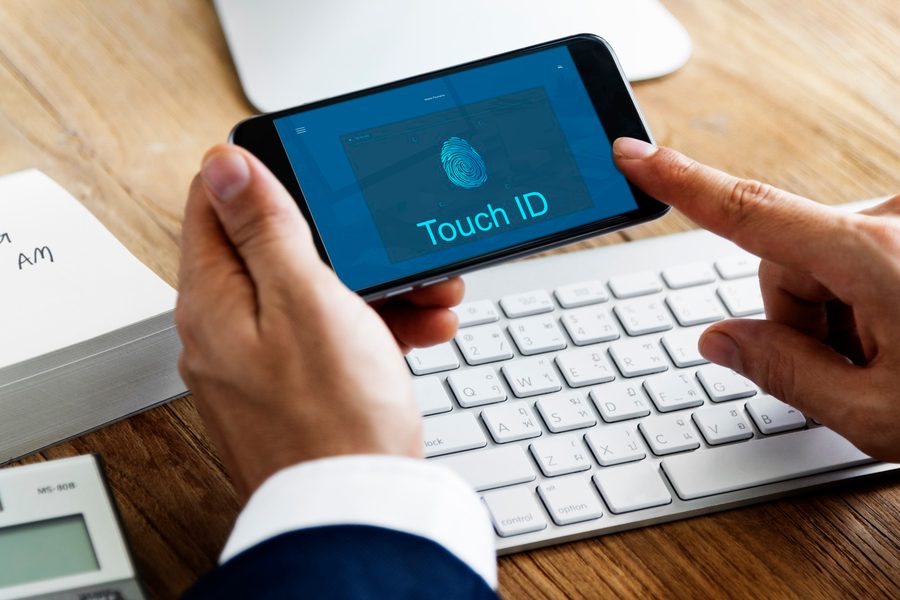
The selfie you take during fintech onboarding isn’t just matched to your ID photo, it’s tested for liveness. Centralized systems use two categories of liveness detection. Passive liveness analyzes the image itself: texture patterns, micro-reflections on skin, and the absence of Moiré patterns that indicate a screen replay. Active liveness asks you to blink, turn your head, or read a random number aloud, actions that are hard for a static image or pre-recorded video to replicate.
Here’s what happened in 2025: sophisticated fraud attempts rose from roughly 10% of all verification attempts in 2024 to 28%, a 180% increase that put deepfakes among the top fraud types. Centralized vendors responded with presentation attack detection (PAD) that analyzes 3D depth maps, infrared imagery, and frame-level inconsistencies that generative AI still struggles to mask. The arms race is real, and it’s expensive: a fintech processing 100,000 verifications monthly might pay $0.50 to $1.50 per biometric check, depending on whether passive or active liveness is deployed.
Decentralized identity handles biometrics differently. In an SSI model, your biometric template stays on your device, the fintech never receives raw facial data. Instead, the wallet performs the liveness check locally and issues a signed attestation: “this person passed a PAD Level B check at 14:32 UTC.” The fintech verifies the attestation’s cryptographic signature without ever seeing your face. This architecture, outlined in NIST’s draft guidelines for mobile driver’s licenses in financial institutions, is gaining traction precisely because it removes the fintech from the data-breach blast radius. But it also means the fintech trusts the wallet vendor’s liveness detection, a chain-of-trust problem that centralized systems avoid by running checks server-side.
Sophisticated fraud attempts in identity verification flows jumped from ~10% in 2024 to 28% in 2025, a 180% increase that made deepfake detection a board-level priority at fintechs.
The Invisible Layer: How Device Fingerprinting Builds Your Risk Profile
Both centralized and decentralized systems run silent checks, but centralized platforms do more of them, and they do them before the user submits any data at all. Your browser’s canvas fingerprint, installed fonts, screen resolution, timezone offset, language settings, and WebRTC leaks all feed into a device hash. That hash is checked against databases of known fraudulent devices, phones used in previous synthetic identity attempts, emulators, rooted Android devices with suspicious kernel modifications.
Centralized vendors like Socure layer these signals into a single risk score. AI fraud detection systems in banking now combine device intelligence with email age analysis, phone number reputation, and IP geolocation to build a profile before the document upload even begins. A device that’s 3 hours old, using a VPN exit node in a different country than the claimed address, and connected to a SIM that was activated yesterday, that combination triggers a step-up verification or an outright block, and it happens in under 300 milliseconds.
Decentralized systems can replicate some of this, a wallet app can report device integrity attestations, but the fingerprinting surface is narrower by design. The user’s device doesn’t leak canvas hashes or font lists to the fintech; it sends only the claims the user consents to release. That’s a privacy win, but it also gives the fintech fewer fraud signals. For a crypto platform facing $12.5 billion in annual fraud losses across the US, as the FTC reported for 2024, fewer signals can mean more risk.
Database Cross-Checks and Risk Engines: The Centralized Advantage
Centralized identity verification wins on matching power, and it’s not close. When you submit your information to a fintech using Socure’s ID+ platform, your data is cross-referenced against a graph of 20,000+ data points, credit bureau header files, utility records, property deeds, phone directories, social media signals, and sanctions lists including OFAC, PEP, and adverse media databases. The system returns a confidence score in under a second.
The math is straightforward. A fintech onboarding 10,000 new users per month with a 78% industry-average first-pass rate (common in higher-risk verticals like crypto) sees 2,200 users funneled into manual review. At 90%+, that number drops to under 1,000, a reduction of 1,200 manual reviews per month, each costing roughly $15 to $30 in staff time. The annual savings exceed $200,000 for a mid-size fintech, which is why centralized providers command premium per-check pricing.
Decentralized identity can’t match this yet. Verifiable credential ecosystems are fragmented, the EU’s eIDAS 2.0 framework is the most mature, but interoperability with US state mDL programs or India’s Aadhaar-based credentials remains aspirational. A fintech accepting decentralized credentials still needs fallback verification paths for users whose issuers aren’t in the trust registry, which means running a centralized pipeline anyway for a substantial fraction of signups.

Where Decentralized Identity Wins: Privacy and Cross-Border Verification
Decentralized identity flips the power dynamic entirely, and on privacy grounds it’s the stronger option. Under an SSI model, the fintech never sees your raw driver’s license image, your Social Security number, or your biometric template. You hold verifiable credentials in a digital wallet, issued by a trusted authority like a government DMV or a bank, and you present cryptographic proofs that answer specific questions: “Is this person over 18?” rather than “What is this person’s date of birth?”
This architecture solves the cross-border problem that centralized systems handle poorly. A fintech operating in the US, UK, and Brazil under centralized KYC must integrate with different document verification vendors, maintain separate compliance workflows for each jurisdiction’s data residency rules, and store ID images in region-specific data centers. With decentralized credentials built on W3C standards, the same wallet can present an mDL from California, an eIDAS-compliant national ID from Germany, and a CPF-linked credential from Brazil, all verified by the issuer’s digital signature, all without the fintech touching raw personal data.
The trade-off is readiness., only 44% of survey respondents in the UK, one of the more advanced digital identity markets, had completed at least one digital identity use case. The infrastructure is emerging, not established. For fintechs serving unbanked populations who may lack smartphones or government-issued photo IDs entirely, neither centralized nor decentralized systems work well without alternative verification paths, utility bill analysis, social vouching, or offline biometric enrollment at partner locations. This is a genuine gap in both architectures, and it’s one that even the most advanced AI-driven systems still struggle with.
I would say there’s no one silver bullet for onboarding. It’s always a good combination of different elements.
Strother’s observation cuts to the heart of the centralized-versus-decentralized debate. The most pragmatic fintech identity stacks in 2025 use centralized verification as the primary engine, layered with device fingerprinting and passive liveness, while beginning to accept verifiable credentials where the issuer ecosystem is mature enough, primarily in EU markets. The combination outperforms either approach alone.
When Centralized Identity Verification Is the Better Choice
Centralized verification is the right call when regulatory clarity, speed, and proven pass rates outweigh privacy idealism. Here’s when it fits:
- You’re a US-based fintech regulated by FinCEN and the FDIC, where CIP Rule compliance requires specific data collection that centralized vendors automate out of the box.
- Your user base is primarily domestic, with fewer than 10% of signups coming from outside your primary jurisdiction, the integration complexity of multi-jurisdiction centralized KYC is manageable at that scale.
- You need 90%+ first-pass rates on day one, and you cannot afford the 6-to-12-month ramp to build a hybrid credential-acceptance infrastructure.
- Your risk appetite is low: you serve a regulated financial product (bank accounts, lending, brokerage) where a false acceptance can trigger audit findings and regulatory penalties measured in six figures.
- You value a single vendor relationship over architectural purity, one contract, one integration, one audit trail for examiners.
When Decentralized Identity Is the Better Choice
Decentralized identity wins when privacy is a product feature, not a compliance checkbox, and when cross-border operations make centralized data storage a genuine liability. Here’s when it fits:
- You operate across 3 or more jurisdictions with conflicting data residency laws, storing ID images in US data centers violates GDPR; storing them in the EU complicates US regulatory access. Verifiable credentials sidestep the storage question entirely.
- Your user base includes privacy-conscious demographics who will abandon signup if asked to upload a government ID to a third-party server, the 78% industry-average completion rate drops further when trust is low.
- You’re building for a future where digital identity is portable: users who verify once with a trusted issuer can reuse that credential across your ecosystem and others, reducing friction over time.
- You have the engineering resources to contribute to open-source SSI infrastructure and the patience to accept lower initial pass rates while the credential ecosystem matures.
- Your fraud model shifts from “catch everything at signup” to continuous, behavior-based authentication that doesn’t depend on a single high-stakes identity checkpoint, a strategy that pairs naturally with AI-powered anomaly detection systems monitoring transactions post-onboarding.
| Criterion | Centralized Verification | Decentralized Identity |
|---|---|---|
| Verification Speed | ★★★★★ (sub-60-second decisions) | ★★★☆☆ (credential negotiation adds latency) |
| Privacy Protection | ★★☆☆☆ (raw PII shared with vendor) | ★★★★★ (zero-knowledge proofs; user-held data) |
| Regulatory Clarity | ★★★★★ (direct KYC/AML mapping) | ★★☆☆☆ (patchwork recognition; eIDAS leads) |
| Fraud Resistance | ★★★★☆ (mature PAD; deepfake detection) | ★★★★☆ (breach-resistant; newer attack vectors) |
| User Experience | ★★★★★ (familiar photo+form flow) | ★★★☆☆ (wallet setup; credential management) |
| Cross-Border Capability | ★★★☆☆ (per-jurisdiction integrations) | ★★★★★ (W3C standards; issuer-agnostic) |
| Overall Winner | Centralized: best for most fintechs today | Decentralized: best for cross-border, privacy-first use cases |

Frequently Asked Questions
What is digital identity verification in fintech?
Digital identity verification in fintech is the automated process of confirming a user’s claimed identity during account signup using document scans, biometric matching, database cross-checks, and device fingerprinting. It satisfies KYC/AML regulations while happening in under 60 seconds for most legitimate users.
How long does fintech identity verification take?
Centralized systems return a decision in 30 to 60 seconds for straightforward cases. Document capture takes under 5 seconds, biometric matching under 3 seconds, and database cross-checks under 300 milliseconds. Step-up verification or manual review can extend the process to hours or days.
Is decentralized identity verification safer than centralized?
It depends on the threat model. Decentralized identity eliminates the risk of a centralized data breach exposing millions of raw ID documents, a real concern given the trade-off between speed and security in verification systems. But centralized systems have more mature anti-fraud capabilities, including deepfake detection and device fingerprinting at scale.
What happens if my ID verification fails?
Most fintechs offer a manual review path for failed verifications. You may be asked to resubmit your document under better lighting, provide a secondary form of ID, or complete additional verification steps. Legitimate users flagged by automated systems typically pass on the second or third attempt, the 78% first-pass rate means roughly 1 in 5 users needs a second try.
Do fintechs store my biometric data after verification?
Centralized vendors typically retain biometric data for the duration of the compliance record-keeping period, often 5 to 7 years under AML rules, after which it should be deleted. Decentralized models never transmit raw biometric data to the fintech at all; the biometric check happens locally on your device, and only a signed attestation is shared.
Can I use the same verified identity across different fintech apps?
In a centralized model, no, each fintech runs its own verification, and your identity is siloed per platform. Decentralized identity is specifically designed for portability: verify once with a trusted issuer, then reuse that verifiable credential with any relying party that accepts it. This is the core promise of self-sovereign identity.
What is self-sovereign identity and is it available now?
Self-sovereign identity (SSI) is a model where individuals control their own identity data in a digital wallet and share only cryptographic proofs, not raw data, with services. It’s available in limited form today: the EU’s eIDAS 2.0 framework supports it, several US states issue mobile driver’s licenses, and fintechs in Europe are beginning to accept verifiable credentials for onboarding.
How do fintechs verify identity across borders?
Centralized systems integrate with document verification vendors that support ID templates from 200+ countries, but compliance with local data residency laws requires per-jurisdiction infrastructure. Decentralized identity handles cross-border verification more elegantly: the verifiable credential is issuer-signed and jurisdiction-agnostic, so a German eIDAS credential works for a US fintech without either party handling raw German ID data.
Does identity verification work if I don’t have a government ID?
Traditional centralized verification struggles here, both centralized and decentralized models default to government-issued photo IDs as the root of trust. Some fintechs serving underbanked populations use alternative methods: utility bill verification, social vouching networks, or offline biometric enrollment at physical locations. This remains a genuine gap in the industry, and neither architecture fully solves it yet.
Sources
- Juniper Research, Digital Identity Verification Checks to Pass 70 Billion in 2024
- UK Government (Office for Digital Identities and Attributes), Digital Identity Sectoral Analysis 2025
- Fenergo, Share of Banks Losing Clients to Poor KYC Practices Surges to Record High (2024)
- NIST, Mobile Driver’s Licenses for Financial Institutions: Draft Guidelines
- FDIC, Collecting Identifying Information Required Under Customer Identification Program Rule
- GBG, Identity Verification Solutions for Fintech Companies (Laura Strother quote)
- Federal Trade Commission, Consumer Sentinel Network Data: $12.5 Billion Lost to Fraud in 2024
- W3C, Verifiable Credentials Data Model v1.1