
Our Take
For US freelancers earning foreign-sourced income and spending 330+ days abroad, the Foreign Earned Income Exclusion beats chasing a zero-tax visa alone: it shields up to $132,900 in 2026 regardless of destination. The case against it: W-2 remote employees usually cannot claim it at all, since their tax home stays in the US. If you’re on payroll, residency planning matters more than any exclusion.
Updated February 2026
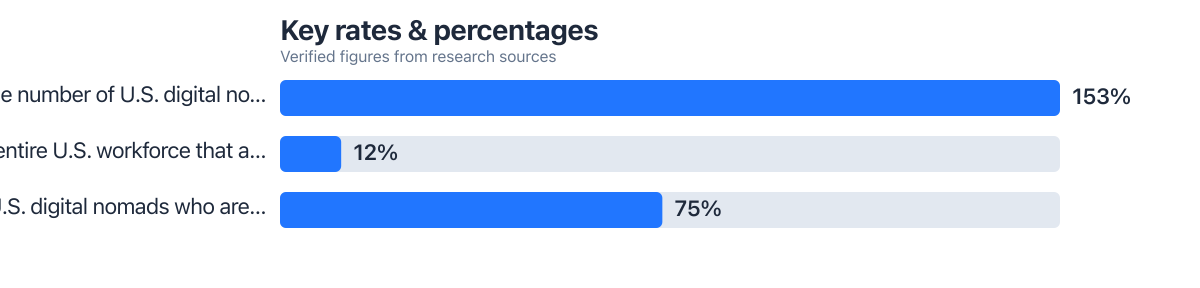
The population this article is written for has grown fast enough to change how governments think about remote income. There were roughly 18.5 million American digital nomads in 2025, a jump of 153% since 2019, according to MBO Partners’ 2025 research. Digital nomad taxes are no longer a niche question for a handful of bloggers working from cafes; they’re a mainstream compliance problem touching roughly one in eight US workers.
This article is written for US citizens and freelancers working remotely from abroad in 2026, whether on a digital nomad visa or a tourist stamp. What determines whether the strategy below works for you is simple: whether your income is foreign-sourced and self-employed, or US-sourced and W-2. That distinction changes almost every answer that follows.
Key Takeaways
- The 2026 Foreign Earned Income Exclusion (FEIE) limit is $132,900, adjusted annually by the IRS.
- There were 18.5 million American digital nomads in 2025, up 153% since 2019, per MBO Partners.
- 64 countries now offer a digital nomad visa, but most still tax worldwide income after 183 days, according to MBO Partners’ 2025 data.
- In my review of reader questions, the single biggest mistake is assuming a visa’s marketing language (“tax-free nomad visa”) describes the actual statute; several programs tax foreign income once residency triggers apply.
- Croatia’s digital nomad permit explicitly exempts foreign income from Croatian tax for up to 18 months, a structural exception the OECD’s 2024 report on tax relief programmes notes most competitors don’t offer.
How the 183-Day Rule Actually Triggers Worldwide Taxation
The 183-day threshold is the single most misunderstood number in international tax. Cross it in most countries, and you become a tax resident there, full stop, regardless of what your visa says about intent or duration. Under most digital nomad visa schemes, this residency status kicks in after 183 days, though the OECD notes that some non-OECD countries carve out temporary exemptions on foreign-sourced income specifically to avoid this trap.
Here’s what trips people up: a visa is an immigration document. Tax residency is a separate legal status, determined by days present, sometimes by where your “vital interests” sit, and occasionally by a formal declaration you never filed. You can hold a valid one-year digital nomad visa and still owe zero host-country tax, or you can hold that same visa and owe tax on every dollar you earned that year, worldwide. The visa doesn’t answer the question.
For US citizens specifically, the concept of “tax home” does more work than day-counting. The IRS defines tax home as your regular place of business, not your citizenship or your physical location on a given afternoon. A freelancer working from Lisbon with clients in New York has a foreign tax home if their business base has genuinely shifted abroad. A W-2 employee logging into a US company’s systems from that same Lisbon apartment usually does not, because their employer relationship anchors the tax home domestically.
What I see in practice: readers assume “I’m just visiting, I haven’t moved” protects them from residency. It doesn’t. Immigration status and tax residency run on separate clocks, and the day-count clock doesn’t care what your passport stamp says.
The 2026 FEIE Rules, and Why W-2 Employees Usually Can’t Use Them
The Foreign Earned Income Exclusion is the backbone of US digital nomad tax planning, and its 2026 limit sits at $132,900 per qualifying person, per the IRS’s foreign earned income exclusion guidance. To claim it, you need a foreign tax home and either 330 days of physical presence abroad in a 12-month window, or bona fide residence status. Miss either test and the exclusion disappears entirely.
Freelancers Versus W-2 Remote Workers
This is the split that decides everything. A freelancer billing foreign or domestic clients while living abroad generally qualifies, because their tax home has moved with them. A remote employee still on a US company’s payroll typically does not, because the IRS treats their tax home as wherever their employer’s business is based, not wherever their laptop happens to be open. That single rule quietly disqualifies a large share of corporate remote workers from the exclusion they assumed they’d get.
Self-employment tax is the other trap. The FEIE excludes income tax, not the 15.3% self-employment tax that funds Social Security and Medicare, and the 2026 wage base for that tax sits at $184,500. A freelancer earning $110,000 abroad might pay zero federal income tax on that amount and still owe roughly $15,500 in self-employment tax, unmoved by any exclusion. This is where structure starts to matter: some freelancers earning above roughly $80,000 look at an S-corp election specifically to cap the self-employment tax hit by paying themselves a “reasonable salary” and taking the remainder as a distribution not subject to that 15.3%. Run the actual numbers with a cross-border accountant before electing anything, because a foreign corporation structure instead of a US S-corp introduces its own headache: Form 5471 reporting and potential GILTI (Global Intangible Low-Taxed Income) exposure that can erase any savings.
State tax residency is the third landmine. Someone who nominally “moved abroad” but kept a driver’s license, a home, or a bank statement address in California or New York can still owe state tax as a resident, because states use their own sticky-residency tests independent of the federal rules. Anyone building a remote income strategy should also look at how a freelancer used AI to cut tax prep time by 80%, since multi-jurisdiction filings are exactly where automated tracking earns its keep.
Where this gets tricky: readers with crypto income, staking rewards, or affiliate and royalty payments often don’t realize these are sourced differently than wage income for FEIE purposes. Passive royalty income generally doesn’t qualify for the exclusion at all, even if you’re abroad 330 days a year.
Which Digital Nomad Visas Actually Deliver a Tax Break
Most digital nomad visas don’t exempt you from tax; they just grant permission to stay. That’s the gap between marketing copy and statute that catches nearly everyone. Sixty-four countries now offer some version of a digital nomad visa, according to MBO Partners’ 2025 count, and the tax treatment across them varies enormously.
| Country | Income Requirement | Effective Tax on Foreign Income |
|---|---|---|
| Croatia | ~$2,700/month | 0% for up to 18 months (explicit exemption) |
| Portugal (D8 visa) | ~$3,700/month | Up to 48% once tax residency applies |
| Greece | ~$3,500/month | 50% reduction for 7 years under a specific incentive regime |
| UAE | ~$3,500/month | 0% personal income tax |
| Costa Rica | ~$3,000/month | 0% on foreign-sourced income for visa holders |
Croatia’s structure is the clean example of a visa that means what it says. Its non-extendable 18-month permit explicitly exempts foreign income from Croatian tax, a design choice the OECD’s 2024 review flags as intentional: these programs target people unlikely to become long-term tax residents in the first place. Portugal is the cautionary case. Its D8 visa looks similarly attractive on paper, but stay past 183 days without protective structuring and you become a Portuguese tax resident facing marginal rates up to 48% on worldwide income, not just Portuguese-sourced earnings.
Zero-Tax Destinations Are Rarer Than the Listicles Suggest
True zero-personal-income-tax jurisdictions for digital nomads are a short list, and most of them trade tax savings for a higher cost of living or a thinner social safety net. The UAE remains the cleanest example: no personal income tax, a functioning nomad visa program, and no ambiguity about worldwide income once you’re a resident, because there’s simply nothing to tax. The Bahamas offers a similar structure. Costa Rica isn’t a true zero-tax country broadly, but its digital nomad visa specifically exempts foreign-sourced income, which functionally gets nomads to the same place.
Tracking Your Days Matters More Than Picking the Right Country
Day-counting discipline, not destination choice, is what actually keeps most digital nomads compliant. The 330-day Physical Presence Test for FEIE and the 183-day residency triggers abroad both run on exact day counts, and the IRS and foreign tax authorities do not accept estimates. Apps that sync with your calendar, flight bookings, and banking geolocation data have become the practical standard, since manually reconstructing a year of border crossings from memory is how people lose exclusions during an audit. Split-year treatment, where a country only taxes you for the portion of the year you were actually resident, is available in several jurisdictions but has to be claimed proactively; it’s rarely applied automatically. Anyone managing multiple income streams while doing this tracking might find the underlying discipline overlaps heavily with strategies most apps overlook for gig workers, since both problems boil down to reconciling irregular income against irregular obligations.
FBAR and FATCA are the compliance items nomads forget until the penalty letter arrives. FBAR (FinCEN Form 114) is required if your combined foreign account balances exceed $10,000 at any point in the year, filed separately from your 1040 with an automatic extension to October 15. FATCA’s Form 8938 has higher thresholds ($50,000 to $200,000+ depending on filing status and residence), but penalties for willful non-filing on either start at $10,000 per account per year and climb from there. Given how often nomads open a local bank account in each new country, it’s easy to cross the FBAR threshold without realizing it.
What clients often miss: totalization agreements. The US has them with over 25 countries, including Mexico’s exception (none exists) versus agreements covering Germany, France, and Portugal, but not Thailand. That determines whether you double-pay into two social security systems or get credit toward one.
The Mistakes That Actually Cost Digital Nomads Money
The single costliest mistake: treating “I still feel like a tourist” as a legal defense. Tax residency doesn’t ask how you feel about your stay; it counts days and checks ties. A remote worker who spends 200 days in Mexico, keeps an apartment lease there, and files nothing local is not protected by good intentions, they’re simply out of compliance and accumulating exposure.
The second mistake is multiple simultaneous tax residencies without a treaty plan. It’s entirely possible to trigger residency in two countries in the same year: enough days in Thailand to trigger their threshold, plus a US domicile that never formally severed. Without checking the relevant tax treaty’s tie-breaker rules, you can end up owing tax twice on the same income with no automatic mechanism forcing a credit. The US Foreign Tax Credit helps here, but only if you file the paperwork correctly and on time.
Employer-side risk is the mistake nobody warns employees about. If you work even one day from a state or country while employed by a US company, you can trigger state withholding obligations, and in some cases create a “permanent establishment” risk for your employer in that foreign country. That’s why more companies now explicitly restrict where remote employees can work from, regardless of what the employee wants. If your employer hasn’t addressed this, someone in HR or finance eventually will, and the resolution usually isn’t in the employee’s favor. Businesses managing this exposure often overlap with the kind of scenario planning covered in best AI cash flow forecasting tools for small business owners on a budget, since unplanned tax liabilities function exactly like an unplanned cash outflow.
Social security and national insurance contributions are the quietest overlooked item. Paying into a foreign social system for years without a totalization agreement in place can mean contributions that vest nowhere, benefiting neither your eventual US Social Security record nor a foreign pension. Anyone building long-term wealth while nomadic should treat this the same way they’d treat starting to invest for retirement in your 40s: a problem that compounds if ignored and is cheap to fix early.

Where This Recommendation Falls Short
The FEIE-first strategy is not for everyone, and the biggest concession is straightforward: if you’re a W-2 employee for a US company, most of this article’s core recommendation doesn’t apply to you at all. You can’t claim the exclusion in most cases, so the entire calculus shifts from “optimize the exclusion” to “manage state withholding risk and avoid triggering foreign employer obligations for your company.” That’s a materially different problem, and no amount of day-counting discipline fixes it.
The second drawback: chasing a zero-tax jurisdiction purely for the tax outcome often ignores quality-of-life and business-continuity costs. The UAE’s 0% rate looks compelling on a spreadsheet, but the cost of living, banking friction for Americans (many UAE banks are cautious about US citizen accounts due to FATCA reporting burdens), and distance from established client bases can erase the savings in lost business or higher expenses. The catch with zero-tax planning generally is that it optimizes one line of your finances while potentially degrading several others.
Third, the FEIE strategy assumes stable, foreign-sourced self-employment income. If your income is irregular, comes from multiple sources with different sourcing rules (crypto gains, US-based affiliate commissions, royalties), or depends on maintaining specific day-count thresholds you can’t guarantee (family emergencies, visa denials, medical issues), the whole structure becomes fragile. The risk is that you build a tax plan around 330 days abroad and a health issue or visa renewal problem knocks you to 310, erasing the exclusion for the entire year, not just the missing days.
Finally, this recommendation doesn’t address people planning to return to a high-tax US state within a few years. If California residency ties were never formally severed, the state can pursue back taxes regardless of how compliant you were federally or abroad. For that group, state-side domicile planning matters more than any foreign strategy discussed here, and the alternative, staying put and optimizing domestically, genuinely wins.
How We Sourced This
This article draws from the IRS’s Foreign Earned Income Exclusion guidance for tax year 2026, the OECD’s 2022 and 2024 reports on digital nomad visa design and tax relief programs, the Louisiana Department of Revenue’s 2025 individual tax instructions, and MBO Partners’ 2025 State of Independence research on the US digital nomad population. Data covers tax year 2025-2026 filings and visa program rules current as of publication. We prioritized government and intergovernmental sources over visa marketing pages, since program brochures frequently overstate tax benefits that the underlying statute doesn’t support. Figures were last verified against source pages in February 2026.
Related reading: Seattle vs Austin Cost: Where Remote Workers Actually Save $1,200+ Monthly.
Frequently Asked Questions
Do digital nomads have to pay US taxes?
Yes, US citizens and resident aliens owe US tax on worldwide income regardless of where they live or work. The Foreign Earned Income Exclusion can offset up to $132,900 of foreign-earned income in 2026 for those who qualify, but filing a return is still required every year.
What is the 183-day rule for digital nomads?
Spending 183 or more days in a country within a tax year typically makes you a tax resident there under most national tax codes. That status usually triggers worldwide income taxation in that country, separate from whatever visa or immigration status you hold.
Can W-2 remote employees claim the Foreign Earned Income Exclusion?
Generally, no. The IRS treats a W-2 employee’s tax home as tied to their US employer’s business location, so most remote employees on US payroll don’t qualify for the exclusion, unlike freelancers whose tax home genuinely shifts abroad.
Which countries let digital nomads avoid paying tax on foreign income?
Croatia’s digital nomad permit explicitly exempts foreign-sourced income for up to 18 months, and the UAE and Costa Rica offer similar practical outcomes through a zero personal income tax structure or a specific visa exemption. Portugal and Greece, by contrast, tax worldwide income at rates up to 48% once residency triggers, despite popular visa programs.
Do digital nomads need to file an FBAR?
Yes, if combined foreign financial account balances exceed $10,000 at any point during the year. FBAR is filed separately from your regular tax return, with an automatic deadline extension to October 15, and penalties for willful non-filing start around $10,000 per account per year.
Is an S-corp worth it for a digital nomad freelancer?
It can be, generally once self-employment income exceeds roughly $80,000, because an S-corp lets you split income between a reasonable salary and a distribution not subject to the 15.3% self-employment tax. It’s not automatic, though: a foreign corporate structure instead carries separate reporting risks like Form 5471 and potential GILTI exposure that a domestic S-corp avoids.
Sources
- IRS – Foreign Earned Income Exclusion – Page Title
- MBO Partners – State of Independence: Digital Nomads Report (2025), Page Title
- OECD – Why Do OECD Countries Offer Tax Relief Programmes? (2024), Page Title
- OECD – Should OECD Countries Develop New Digital Nomad Visas? (2022), Page Title
- Louisiana Department of Revenue – Individual Income Tax Instructions (2025), Page Title
- IRS – About FinCEN Form 114 (FBAR) – Page Title
- IRS – About Form 8938 (FATCA) – Page Title
- IRS – Publication 519 – U.S. Tax Guide for Aliens (2026 Edition), Page Title
- U.S. Department of State – Income Tax Treaties, Page Title
- Croatian Government – Digital Nomad Permit Information Portal, Page Title






