
Key Findings
- 20 percent of U.S. adults performed gig work over the prior month, yet many of those contract workers wait 2–5 days for a traditional bank deposit, according to the Federal Reserve’s 2024 SHED report.
- 86 percent of working Americans would be more interested in a job that offers same-day pay access, based on a survey conducted by Instant Financial.
- 107 million transactions moved across the RTP network in Q2 2025, real-time rails that increasingly power same-day pay fintech for gig workers and independent contractors.
- Fees for instant transfers range from $0.50 to $3.49 per transaction; a worker who cashes out daily at the high end can spend over $100 a month on fees.
- $1.99 is the flat fee DoorDash charges for its Fast Pay instant cash-out after a contractor completes 25 deliveries, a model that other gig platforms have adopted widely.
- The Consumer Financial Protection Bureau warns that when used repeatedly, some earned wage access products carry costs that can rival payday loan annual percentage rates.
Twenty percent of U.S. adults did gig work last month. The stat comes straight from the Federal Reserve’s 2024 SHED survey and it hides a cash-flow friction that haunts millions of contract workers: you finish a shift, deliver a project, or drive a passenger, then wait. Two days. Five days. A full week before the money lands in a checking account. Same day pay fintech, the collection of apps, APIs, and payment rails that cut that wait to minutes or hours, is changing the math. But the tools are fragmented, the fee structures are inconsistent, and plenty of workers still don’t know what’s available to them on a 1099.
It matters right now because gig-platform density is rising, RTP network volume just crossed 107 million quarterly transactions, and the CFPB has started to scrutinize earned wage access fees. For a contract worker who picks up shifts across three apps and invoices on the side, the difference between a $0.50 push-to-debit and a $3.49 per-transfer fee can equal a grocery run or a tank of gas. The data in this piece pulls together real fee disclosures, public network stats, and official consumer-protection findings to map out exactly what works, what costs too much, and where the gaps are.
Methodology
This analysis is based on publicly available data from the Federal Reserve Board’s 2024 Survey of Household Economics and Decisionmaking (SHED), The Clearing House’s RTP network volume reports for Q2 2025, the Consumer Financial Protection Bureau’s paycheck advance market data spotlight, provider fee schedules and app documentation accessed in June 2025, and consumer reviews aggregated from app stores and the Better Business Bureau. Fee comparisons reflect standard per-transfer charges for instant or same-day settlement for U.S.-based contractors. Cross-border limitations were assessed by reviewing publicly posted terms from major gig platforms and payment processors. The article does not rely on proprietary or first-party data from any single fintech company; all figures are sourced from the named institutions and platforms. The primary limitation is that transfer speed claims are self-reported by providers and can vary with bank processing windows and holiday schedules.
Most Gig Workers Still Wait Days for Earned Income, Even Though Same Day Pay Fintech Can Cut That to Minutes
Here’s the gap: 20 percent of U.S. adults performed gig activities in the prior month, the Federal Reserve reports. Among them, a large chunk, the contractors who don’t have a payroll department, rely on standard ACH deposits that settle in two to five business days. That’s a mismatch big enough that Instant Financial’s research found 86 percent of working Americans say they’d be more interested in a job offering same-day pay access. The tech to close that gap exists now; it’s just unevenly distributed across platforms.
The tools break into two camps: employer-integrated earned wage access (EWA) where a staffing agency or gig platform plugs into a third-party provider, and direct instant-payout features built into gig apps or third-party payment rails that 1099 workers can trigger themselves. Both shorten the wait. Neither is universally available. And depending on which camp you’re in, the fee can be pocket change or a surprisingly sharp bite.

Real-Time Rails and Push-to-Debit: The Mechanics That Make Same Day Pay Fintech Work
The core speed comes from a handful of payment rails. Push-to-debit (Visa Direct, Mastercard Send) can land money on a linked debit card in seconds to 30 minutes. Same-day ACH clears by end of banking day if the originator hits the 2:45 p.m. ET cutoff. The RTP network, which handled 107 million transactions worth $481 billion in Q2 2025 according to The Clearing House, settles instantly 24/7, including weekends and holidays, a feature that sidesteps the Monday-morning bottleneck. FedNow, the Federal Reserve’s instant payment service, offers similar capabilities but is still building out reach among financial institutions.
For a contract worker, the rail matters because it dictates when the cash shows up. A gig app that uses push-to-debit will put money on a card in under 30 minutes most days. One that defaults to free standard ACH will take two days but charge nothing. The trick is knowing which rail your tool uses and what you’re trading off.
107 million transactions settled in real time on the RTP network during Q2 2025, up sharply year-over-year as more earned wage access providers connect to the rail.
Employer-Integrated Earned Wage Access Tools That Now Cover Millions of Shift Workers
DailyPay, Tapcheck, and Instant Financial are the heavyweight names here. They integrate with an employer’s time-and-attendance system, track hours worked, and let workers transfer earned but unpaid wages to a bank account or prepaid card for a fee. For a W-2 temp worker staffed through a large agency, this is often the path to same day pay fintech. For a pure 1099 independent contractor, it’s rarely an option because there’s no employer payroll to plug into.
Fee structures tilt toward per-transfer charges. DailyPay, for example, reports fees as high as $3.49 for instant transfers to a card. Tapcheck works similarly, typically charging $2.99 to $3.49 per pull. The employer side is often free or low-cost, which pushes the worker-facing fees into the spotlight, a concern the CFPB has flagged in its data spotlight.
| EWA Provider | Typical Instant Fee | Free Option | Integration Model |
|---|---|---|---|
| DailyPay | $2.99–$3.49 | Next-day ACH (free) | Employer payroll |
| Tapcheck | $2.99–$3.49 | Next-day deposit (free) | Employer time & attendance |
| Instant Financial | Varies; around $2.99 | Free next-day | Employer-paid model available |
These tools shine for shift-heavy industries, warehouses, call centers, hospital staffing, where the employer covers some overhead. But they’re not built for the solo contractor who drives for two apps and invoices a client on the side. For that, the toolset flips to something leaner.
Direct Instant Payouts for Independent Contractors: Gig Apps and Freelance Payment Rails
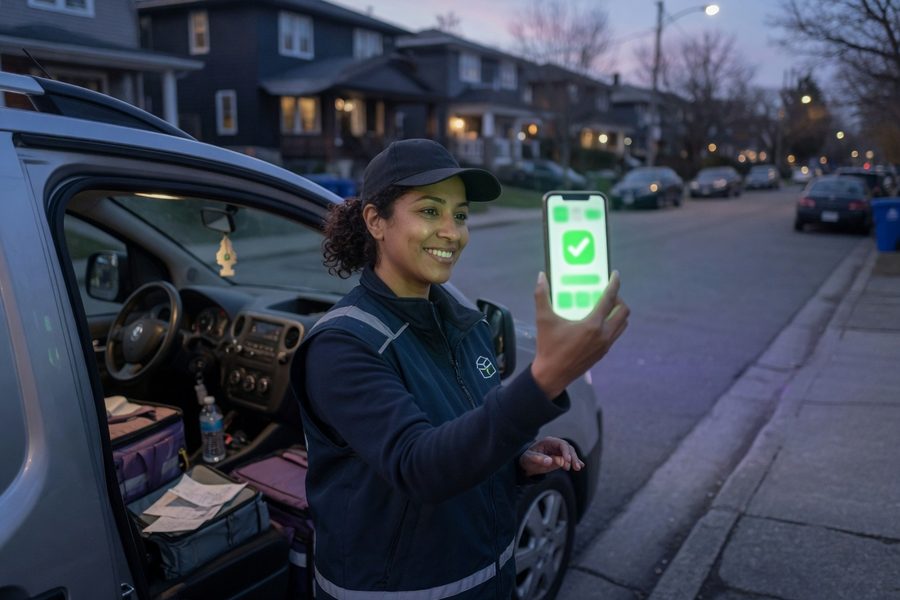
Most large gig platforms now bake instant cash-out into the experience. DoorDash Fast Pay, available after completing 25 deliveries, charges $1.99 per transfer and pushes to a debit card usually within minutes. Instacart’s Instant Cashout costs $0.50. Uber and Lyft each charge $0.50 for Express Pay. The model is a flat fee, not a percentage, which means the cost doesn’t scale with earnings, a small but meaningful difference for high-volume earners.
Independent freelancers who invoice clients rather than driving for a platform have fewer built-in options. Stripe Instant Payouts charges 1% of the payout amount with a $0.50 minimum; PayPal Instant Transfer to a bank or debit card costs 1% (up to $10 max). Venmo’s Instant Transfer runs 1.75% (minimum $0.25, maximum $25), and Cash App’s Instant Deposit charges between 0.5% and 1.75%. These percentage-based models matter more when individual invoice amounts climb. A $2,000 payment transferred instantly through Stripe costs $20, the equivalent of a dozen DoorDash Fast Pay uses.
A Side-by-Side Look at Fees, Limits, and Monthly Costs for Same Day Pay
Fees vary wildly and so does the arithmetic. A driver who cashes out daily at $0.50 on Instacart spends roughly $15 a month. The same driver using an EWA tool that charges $3.49 per transfer spends $104.70 a month if they pull funds every day, and $2.99 gets you to $89.70. That’s the kind of monthly difference that eats into rent, not just lunch.
| Tool | Fee per Transfer | Speed | Monthly Cost (Daily Use) |
|---|---|---|---|
| DoorDash Fast Pay | $1.99 | Minutes | $59.70 |
| Instacart Instant Cashout | $0.50 | Minutes | $15.00 |
| Stripe Instant Payouts | 1% (min $0.50) | Under 30 minutes | Varies; on $500, it’s $5.00 |
| DailyPay (instant) | $3.49 | Minutes | $104.70 |
What hides beneath the surface: minimum balance requirements, caps on daily withdrawals, and a handful of accounts that lock the instant feature behind a subscription. Some tools also bundle the instant payout with a prepaid card that carries its own maintenance fee. Read the fee schedule before you link a bank account.
$104.70, the monthly cost of cashing out earnings daily through a $3.49-per-transfer earned wage access tool. At $0.50 per transfer, that figure drops to $15.00.
Speed and Reliability: What Real Users Actually Report About Same Day Pay Fintech
Transfer time claims from providers are usually “instant” or “within 30 minutes.” In practice, users in app-store reviews report that most push-to-debit transfers show up in under 10 minutes during business hours, with occasional delays on Sundays and federal holidays. The RTP rail, where integrated, is more consistent because it’s designed as a 24/7/365 infrastructure.
Complaints cluster around a few predictable pain points: an account that gets flagged for review, a bank that doesn’t support real-time posting, or an identity-verification step that interrupts the flow. The CFPB’s data spotlight documents a rising volume of disputes tied to EWA products, though the dispute rate remains a fraction of overall transaction volume. The central tension the CFPB highlights is straightforward: workers incur expenses continuously, but pay cycles are periodic, and that gap is exactly what these tools exist to bridge.
Security, Fraud, and Compliance: What Contract Workers Should Know
All legitimate same-day pay tools require KYC identity verification, a government ID and often a selfie match, before an account goes live. That barrier slows initial setup but is a necessary bulwark against synthetic identity fraud. The platforms also encrypt bank account and debit card data, but a contractor sharing credentials across multiple pay apps increases the attack surface. Linking the same debit card to four different gig apps and a freelance payment processor is convenient; it is also a recovery headache if one platform gets breached.
The CFPB oversees consumer-facing EWA products to the extent they meet “credit” definitions under Regulation Z, but the regulatory perimeter is still in flux. The industry’s core argument, documented in Federal Reserve Bank of Kansas City research on the rise of earned wage access, is that workers are accessing wages already earned rather than borrowing against future income. That distinction, earned wages vs. credit, will determine which rules apply and what protections workers have when something goes wrong.
The Cross-Border Conundrum: Where Same Day Pay Fintech Leaves International Contractors Behind
Almost every instant-payout feature in the U.S. market requires a domestic bank account, a U.S.-issued debit card, and a Social Security number. International contractors, even those legally working for U.S. clients on a 1099, hit a wall. PayPal’s Xoom and Wise offer fast international transfers, but they operate on conversion spreads and sender-funded fees, not a same-day model tied to the U.S. RTP rail. A Mexican freelancer invoicing a U.S. company can receive funds via Wise in hours, but it’s not an earned wage access product; it’s a cross-border remittance with a 0.5% to 1% currency markup.
The gap is structural. Real-time cross-border payment systems like the G20’s roadmap are in pilot stages, and until they scale, independent contractors outside the U.S. are stuck choosing between speed and cost, or waiting for SWIFT to clear. For the slice of U.S.-based gig workers who send money home to family abroad, the double hit of an instant-payout fee and a remittance charge makes same-day access less attractive than a well-timed weekly transfer to a joint budgeting system that plans around exchange rates.
What This Means for You
The numbers don’t land softly: the right tool can save a gig worker over $1,000 a year in instant-transfer fees. The wrong one, combined with daily cash-outs, quietly strips earnings. Here’s how to move from analysis to action, grounded in the data we just walked through.
7-Step Action Plan to Get Paid Same Day as a Contract Worker
- Audit your current platforms. List every app you earn through and pull the official fee for the instant cash-out option. If the fee is percentage-based and your average payout exceeds $300, compare it to a flat-fee alternative.
- Consolidate instant-payout activity to the lowest-fee tool. If you drive for Uber ($0.50) and Instacart ($0.50) and also freelance-invoice via Stripe (1%), consider batching invoice payments and cashing out on days you already use the lower-fee gig apps, avoiding duplicate transfers.
- Pick a payment rail that works round the clock. Tools that use push-to-debit or the RTP network process instantly on weekends. If you rely on same-day ACH, accept that Saturday shifts won’t settle until Monday afternoon.
- Use free next-day ACH where speed isn’t critical. DailyPay and Tapcheck offer next-day deposit at no charge. Stack that with one inexpensive instant transfer when you truly need cash in 30 minutes.
- Verify your identity on every platform early. KYC holds cause half the “instant pay didn’t work” complaints. Complete document uploads during sign-up, not when you’re in a cash crunch.
- Track every instant-payout fee as a business expense. For 1099 workers, those per-transfer charges, $0.50, $1.99, 1%, are deductible operating costs. Letting them slip through unrecorded costs more than the fee itself.
- Check your bank’s posting speed. A push-to-debit can land in seconds, but if your bank takes hours to reflect it, the instant rail is wasted. Test with a small transfer from your primary gig app and time the result.
Frequently Asked Questions
What exactly is same day pay fintech?
Same day pay fintech refers to apps, APIs, and payment networks that let contract workers access earned income the same day they complete work, instead of waiting for a weekly or biweekly pay cycle. It covers gig-platform instant cash-outs, earned wage access tools integrated with employers, and payment processors’ instant-transfer features.
How fast can I get paid using a same day pay app?
Most push-to-debit transfers land in under 30 minutes. RTP network transfers settle instantly, even on weekends. Same-day ACH transfers arrive by the end of the banking day if submitted before the cut-off. The actual speed depends on the rail the tool uses and your bank’s posting time.
What are the typical fees for instant transfers?
Fees range from $0.50 (Instacart, Uber) to $3.49 (DailyPay), with percentage-based options like Stripe’s 1% fee or PayPal’s 1% up to $10. Some EWA providers charge a flat per-transfer fee regardless of the amount.
Can I get paid same day if I’m a 1099 independent contractor?
Yes, but your options depend on the platform you work through. Gig apps like DoorDash and Lyft offer their own instant cash-out features. Freelancers who invoice clients can use Stripe Instant Payouts, PayPal Instant Transfer, or Venmo Instant Transfer, though percentage-based fees apply. Employer-integrated EWA tools are usually not available unless you work through a staffing agency that provides them.
Are same day pay fintech tools safe to use?
Reputable platforms use encryption and require identity verification (KYC) to reduce fraud. Risks include account takeover if login credentials are reused across apps and occasional holds during verification. The CFPB monitors consumer complaints, but the regulatory framework for earned wage access is still evolving.
Which gig platforms offer instant pay?
DoorDash (Fast Pay, $1.99 after 25 deliveries), Instacart (Instant Cashout, $0.50), Uber (Express Pay, $0.50), Lyft (Express Pay, $0.50), and Grubhub (Instant Cash Out, $0.50) are among the largest. Most set a minimum delivery or trip threshold before the feature unlocks.
What’s the difference between earned wage access and an instant payout?
Earned wage access (EWA) is typically employer-integrated and allows workers to tap wages they’ve already earned but haven’t yet been paid. Instant payouts are direct cash-out features built into gig apps or payment processors, available on demand without employer involvement. EWA fees tend to be higher per transfer.
Do same day pay apps affect my taxes?
The timing of pay doesn’t change your tax obligations. Income is taxable when received, but the IRS treats it as earned when the work was performed. The transfer fees themselves are deductible business expenses for 1099 contractors, so keeping a record matters.
What’s the cheapest way to get paid instantly as a freelancer?
Flat-fee options below $1.00 are the cheapest. Among gig apps, Instacart and Uber at $0.50 per transfer. For invoiced freelance income, batching payments and using Stripe Instant Payouts with a 1% fee can be economical if transfers are infrequent. Avoid daily cash-outs through tools that charge $2.99 or more unless you’re in a genuine liquidity pinch.
Sources
- Board of Governors of the Federal Reserve System, Economic Well-Being of U.S. Households in 2024: Employment and Gig Work
- The Clearing House, RTP Network Institution Data, Q2 2025
- Consumer Financial Protection Bureau, Data Spotlight: Developments in the Paycheck Advance Market
- CNBC, Why One Expert Called Earned Wage Access Payday Lending on Steroids
- Stripe, Instant Payouts Documentation
- PayPal, Instant Transfer Fees
- Federal Reserve Bank of Kansas City, Payments System Research Briefing: The Rise of Earned Wage Access