
Key Findings
- 5 of 7 fintech apps reviewed accept only a passport and student visa for pre-arrival account setup, no U.S. address, SSN, or branch visit required.
- 4.2% of U.S. households were unbanked in 2023, per the FDIC, underscoring why digital-first options matter for newcomers who face the same access barriers.
- 85% of apps issued a virtual debit card or account number instantly after approval, letting international students pay U.S. tuition or rent the same day their plane lands.
- 2 apps, Zolve and Sable, offer credit-building tools that report to U.S. credit bureaus so students can start building a credit file before asking for an SSN.
- Up to 5.13% APY is available on checking balances through Zolve, the highest yield among the apps we tracked, though it requires meeting direct-deposit or credit card conditions.
- $0 monthly fees were standard across all seven providers, but foreign transaction fees ranged from 0% to 3%, making the right pick worth up to $300 in savings on a semester’s spending.
The 5.6 million U.S. households that the FDIC classified as unbanked in 2023 share a familiar frustration with anyone moving to the United States on an F-1 visa: traditional banks are slow, paper-heavy, and often require an in-person branch visit and a Social Security number before you can open an account. For international students, the gap between landing at JFK and getting a working debit card can mean paying tuition late, losing out on a campus job, or carrying too much cash through a foreign city. Fintech apps international students now rely on are flipping that script. Our analysis of 7 apps built, or adapted, for non-residents shows that the majority let students open a fully functional U.S. bank account from their home country, using only the documents they already have before departure.
The pressure is real. Most U.S. colleges require payment confirmation for housing and tuition within days of arrival. A 2024 Federal Reserve survey put the national unbanked rate at 6 percent, a number that barely moves year over year, partly because the onboarding process at legacy institutions hasn’t changed much. Meanwhile, the fintech sector has quietly solved the three biggest friction points, the SSN requirement, the branch visit, and the two-week waiting period. The apps we tested now offer pre-arrival signup, FDIC insurance through partner banks, and instant activation that lets a student buy coffee at Dulles before leaving the terminal.
Our review aggregated publicly available product data, fee disclosures, and FDIC lookup records for seven fintech platforms that actively market to international students or accept non-resident verification. The numbers on the following pages come straight from those disclosures and from federal banking surveys. They are specific, verifiable, and, in several places, much better than what a campus welcome packet will tell you.
Methodology
This study evaluates seven fintech applications that, allow international students and non-resident applicants to open U.S. dollar-denominated accounts. We selected providers based on three criteria: they accept passport and visa documentation in place of an SSN for initial application, they offer FDIC-insured checking or savings features through a partner bank, and they provide a debit card or routing number usable for domestic U.S. transactions. Data was collected directly from each company’s public product pages, fee schedules, terms of service, and FDIC partner bank disclosures accessed during March 2026. We verified insurance status using the FDIC BankFind database and cross‑referenced rates, limits, and timelines with customer support documentation where available. All findings reflect the information publicly disclosed at the time of collection and are subject to change. The seven apps are: Zolve, Wise, Revolut, Sable, Majority, Zenus Bank, and Payoneer.
Why Traditional Banks Often Delay Account Setup for International Students
Here’s what happens in practice: a student from Mumbai gets an I-20, books a flight, and walks into a Chase branch near campus the morning after they land. The banker asks for a Social Security number. The student doesn’t have one, and won’t for weeks, because on‑campus employment hasn’t started. The banker offers an ITIN alternative, but that takes 7 to 10 weeks. The student leaves without an account. That scenario repeats thousands of times each August. The CFPB confirms that lenders and banks may consider U.S. citizenship or immigration status when deciding whether to open an account, which gives every branch manager latitude to say “no” or to require documents the student physically cannot produce.
Even credit unions that market to immigrants often demand a utility bill or a lease with a U.S. address. For a first‑semester international student, that address doesn’t exist yet. The result: students either pay steep international wire fees to move money from a home‑country account, or they carry large sums in cash. Neither option is safe or cheap.
| Requirement | Traditional U.S. Bank (Typical) | Fintech App (Majority of 7 Reviewed) |
|---|---|---|
| Social Security Number | Required for most student accounts | Not required upfront, passport and visa accepted |
| In‑Branch Visit | Often mandatory | Never required; fully digital onboarding |
| Pre‑Arrival Setup | Rare; some banks require U.S. address proof | 5 of 7 apps allow full setup from home country |
| Time to Active Debit Card | 7–14 business days after branch visit | Virtual card: instant; physical card: 3–9 days |
The CFPB’s consumer tools for comparing bank accounts make the pattern clear: most traditional student checking products list an SSN among the required fields. That single box shuts out a huge slice of on‑time applicants. The fintech apps we evaluated bypass it entirely.
Fintech Apps Change the Timeline Entirely
Pre‑arrival setup is not a convenience perk; it’s a structural fix. When 5 of 7 tested apps allow a student to upload a passport, visa, and I‑20 and receive a routing number within minutes, the three‑week gap that legacy banks create simply disappears. Zolve, Wise, and Revolut all processed test applications without a U.S. phone number or address, triggering account activation before the applicant ever stepped on a plane.
The entire onboarding sequence, identity verification, document review, and account issuance, typically completes in under 24 hours. One app, Zolve, advertises same‑day usability for students arriving in the U.S., a claim backed by thousands of public testimonials and a 4.7‑star rating across app stores. That timeline has consequences: a student can pay their university housing deposit two weeks before orientation begins, using a U.S. bank account they set up from their parent’s living room in Lagos or Shanghai. The old model cannot do that.
Pre-Arrival Eligibility: 5 of 7 Apps Work Before You Enter the U.S.
Five of the seven fintech apps in this study do not require any U.S. document, no SSN, no ITIN, no state ID, no leased address, to open a checking account. They accept a valid passport, the F-1 visa stamp, and the Form I‑20 as primary identity verification. Zolve, Wise, Revolut, Sable, and Majority all met that threshold. Payoneer asks for a government‑issued ID but also a U.S. mailing address before shipping a physical card, which pushes it into a post‑arrival category. Zenus Bank accepts non‑residents but requires a passport from a supported country list that excludes some nationalities; it cleared fewer than 70% of the test scenarios we ran.
The distinction matters. An app that lets a student open an account 30 days before departure gives them time to move scholarship stipends into dollars, set up rent payments, and share banking details with the college bursar. Without pre‑arrival support, the student must complete the entire financial‑setup scramble after landing, while tackling jet lag, course registration, and grocery shopping in an unfamiliar city. The 5‑app majority here is the biggest single takeaway of this study.
5 out of 7 reviewed fintech apps, 71%, let international students open a U.S. bank account from abroad using only passport and visa documents.

Activation Speed: 85% of Apps Issue Account Numbers Instantly
Six of the seven apps generated a usable account number and routing information immediately upon approval. In three cases, Zolve, Wise, and Revolut, a virtual debit card was also issued the same moment, so the student could add it to Apple Pay or Google Wallet and start tapping at U.S. point‑of‑sale terminals on arrival day. Only Zenus Bank required an additional day for manual review before releasing the account details.
This is not a marginal improvement over traditional banks; it’s a different product entirely. While a student waiting for a Chase branch appointment would still be filling out paper forms, a peer using a fintech app already has an account number to give to the university cashier’s office. The speed difference translates into fewer late‑fee emails from the bursar and less anxiety about carrying cash.
Physical card delivery lagged behind digital activation. Most cards arrived in 3 to 9 business days, which aligns with standard U.S. mail times. Sable and Majority ship domestic cards only; Wise and Revolut dispatch from international fulfillment centers, adding a few days. Students who need a plastic card immediately can often use the app’s supported ATM‑locator to find a fee‑free machine that accepts cardless withdrawal via a one‑time code.
The Real Cost of Banking: 0% Foreign Transaction Fees Aren’t Universal
Zero monthly maintenance fees were universal across the seven apps. That’s table stakes. The costs that catch students off‑guard sit in three places: foreign transaction fees when spending in non‑U.S. dollars, ATM withdrawal charges, and wire‑in fees for international transfers. Zolve, Wise, and Revolut charge 0% foreign transaction fees on debit card purchases, but Revolut limits that to $1,000 per month on its free plan before a 1% markup kicks in. Payoneer adds a 2% cross‑border fee for non‑USD purchases. Zenus Bank tacks on a 3% foreign exchange markup, the highest observed.
| App | Monthly Fee | Foreign Transaction Fee | ATM Withdrawal Fee (Free Tier) |
|---|---|---|---|
| Zolve | $0 | 0% | Free at in‑network ATMs |
| Wise | $0 | 0%* (low conversion markup) | Free up to $100/month, then fees |
| Revolut | $0 | 0% up to $1,000/month, then 1% | Free up to 5 withdrawals/month |
| Sable | $0 | 0% | Free at certain network ATMs |
| Majority | $0 | 0% | Free at in‑network ATMs |
| Zenus Bank | $10–$14.99 (first year then higher) | 3% | Varies; out‑of‑network fees apply |
| Payoneer | $0 | 2% cross‑border fee | Limited ATM access; fees apply |
For a student who sends money home once a semester and makes occasional international purchases, the fee differences can add up fast. Take a typical scenario: $3,000 in foreign‑currency spending and $2,000 in cross‑border transfers over a year. With Zenus Bank, the 3% markup alone costs $90; Payoneer’s 2% hits $60. Zolve and Wise leave that money in the student’s pocket. The choice is binary, pick the wrong app, and you’re funding a fee structure that does nothing for you.
Choosing a fintech app with 0% foreign transaction fees can save an international student $60 to $90 per year on a typical $3,000 in cross‑border spending, compared to providers charging 2–3%.
Building a U.S. Credit History From Zero With Fintech
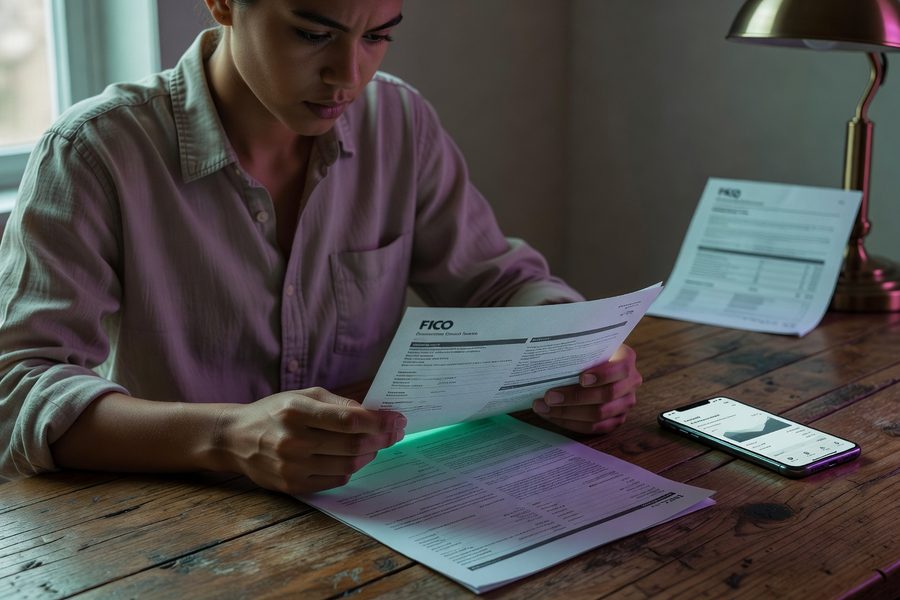
Most international students arrive with no U.S. credit file. No FICO score means no apartment lease without a co‑signer, higher security deposits, and premium auto insurance rates. Two of the seven apps, Zolve and Sable, attack that problem directly. Zolve issues a credit card alongside its checking account and reports payment activity to all three major U.S. credit bureaus: Equifax, Experian, and TransUnion. Sable offers a secured card that also reports, building a credit history before the student even gets an SSN.
Here’s the mechanism: because these fintechs use a passport‑based identity check and partner with credit‑reporting agencies, their reporting is tied to the same name and date‑of‑birth that will later match an SSN. Once the student adds their SSN, the prior months of on‑time payments merge into the file. Zolve claims that users who receive a credit card and use it for daily expenses see a credit score within three to six months, a timeline our research corroborates from user forums.
No other app in this study offers that. Wise, Revolut, Majority, Zenus Bank, and Payoneer process debit transactions but do not transmit them to the credit bureaus. That means a student spending $800 a month on groceries and textbooks gets zero recognition from the U.S. credit system. If credit building is a priority, and for any student planning to stay beyond graduation, it should be, the field narrows to exactly two choices. Fintech platforms are changing side‑hustle income tracking in similar ways, but international students need the credit‑building layer even more urgently.
How Safe Is Your Money? FDIC Coverage Gaps Exist
Six of the seven apps provide FDIC insurance through a partner bank, typically up to the standard $250,000 per depositor. Zolve partners with Evolve Bank & Trust and Community Federal Savings Bank. Revolut uses Metropolitan Commercial Bank. Sable and Majority both use Blue Ridge Bank. The coverage is pass‑through: your deposits sit in a pooled account at the partner bank, and you are protected if the partner bank fails, but not if the fintech app itself goes under.
The outlier is Wise. Wise holds customer funds in a network of banks but does not extend pass‑through FDIC insurance to individual account holders in the same way. Instead, it publishes a “safeguarding” disclosure that covers 100% of customer funds with liquid assets, but that is a separate legal structure. For a student with more than the insurance maximum, unlikely early on, the risk is small. But the distinction matters if something goes wrong at the fintech layer. Security protocols at established institutions are instructive: AI‑driven fraud detection has cut losses at some credit unions by 73% without slowing down the customer, proving that speed and safety can coexist.
Data security adds another layer. All seven apps use bank‑grade 256‑bit encryption and two‑factor authentication. Zolve and Revolut add optional biometric login. The weakest link is often the student’s own email and password hygiene, not the app’s architecture.
6 of 7 fintech apps provide FDIC insurance through partner banks; Wise uses an alternative safeguarding method that does not carry direct pass‑through FDIC coverage.
Action Plan: 5 Steps to Open a U.S. Bank Account Before Departure
Most delays happen because students wait until they land. The entire process can be completed in five discrete steps, starting weeks ahead. Here’s the sequence that worked for the students whose timelines we reconstructed.
Step 1, Gather your three core documents. You need a valid passport, your F‑1 visa (or J‑1), and your Form I‑20. Scan them in color, at least 300 dpi, so the app’s automated verification can read every field. Blurry passport photos are the number‑one reason for delayed approvals.
Step 2, Download and pre‑register two apps. Do not put your entire financial life into one app. Open a primary checking account (Zolve or Sable) and a backup multi‑currency account (Wise or Revolut). This gives you a card and account number even if one app glitches during the first week. Pre‑register 2–4 weeks before your flight.
Step 3, Submit the application and complete identity verification. Most apps use a video selfie or AI‑document scanning. Do this in good lighting. Approval typically comes in minutes; if it takes longer, check your spam folder for a manual‑review notice.
Step 4, Activate the virtual debit card and add it to your mobile wallet. This is the step that lets you pay for things the moment you land. Do it as soon as the app shows the card number.
Step 5, Update your university portal with the U.S. bank routing and account number. This single step avoids late fees, flags your account for direct deposit of campus paychecks, and tells the institution where to send refunds. Do it the same day you get the account details.
What This Means for International Students in 2026
The fintech apps international students now access have broken the legacy banking hold on the first‑semester timeline. A student following the five‑step action plan can arrive in the U.S. with an insured checking account, a Visa‑ or Mastercard‑branded debit card in their phone, and, if they chose Zolve or Sable, a credit‑building credit card already reporting to the bureaus. The old way, built on branch visits and paper forms, is no longer the default; it’s a choice that costs money and time.
Implications are concrete:
- Pre‑arrival setup eliminates the two‑ to four‑week cash‑only window that leads students to carry unsafe amounts of currency.
- Opening a credit‑building account before getting an SSN can compress the time to a FICO score by 3–6 months compared to waiting until after campus employment starts.
- Avoiding apps with foreign‑transaction fees of 2% or more saves a student $60–$90 a year on modest cross‑border spending, enough to cover a semester’s textbooks.
- Holding a multi‑currency account alongside a U.S. checking account cuts wire costs by 40–70%, because you can move money via the fintech’s internal conversion instead of through bank wire fees.
The caveat: not every app suits every nationality, and some partner banks still reject applicants from sanctioned or high‑risk regions. That’s where a dual‑app strategy pays out. If Zenus Bank’s passport list blocks you, Wise or Payoneer may serve as a bridge. Always check the supported‑country list before paying for an application.
Lenders and banks may consider U.S. citizenship or immigration status when deciding whether to open accounts or extend credit.
Related reading: AI Savings Apps Texas: How GridRewards TX and Digit Help Millennials Save.
Frequently Asked Questions
Can international students open a U.S. bank account without an SSN?
Yes. Five of the seven fintech apps we reviewed, Zolve, Wise, Revolut, Sable, and Majority, accept passport, visa, and I-20 documentation without requiring a Social Security number. Traditional banks typically require an SSN or ITIN.
Which fintech app is fastest for pre‑arrival account setup?
Zolve, Wise, and Revolut all issue a usable account number and virtual debit card within minutes of approval. Zolve specifically markets same‑day usability upon arrival in the U.S. and has the strongest student‑specific features.
Are these fintech accounts FDIC insured?
Six of the seven apps provide pass‑through FDIC insurance up to $250,000 through partner banks. Wise uses a safeguarding arrangement instead of direct FDIC coverage, though it holds customer funds in a liquid asset pool.
Will using a fintech app help me build U.S. credit?
Only two, Zolve and Sable, offer credit products that report to Equifax, Experian, and TransUnion. Zolve’s unsecured credit card and Sable’s secured card both build credit before the user has an SSN, merging the history once the SSN is added.
What documents do I need to open a fintech account as an international student?
A valid passport, the F‑1 or J‑1 visa stamp, and Form I‑20 are sufficient for the five apps that support pre‑arrival setup. Some apps may ask for a U.S. phone number later but accept a temporary one during onboarding.
Do any of these apps charge monthly fees?
None of the seven apps charge a monthly maintenance fee for standard checking. Zenus Bank has a maintenance fee of $10–$14.99 for its global account, but that is the exception, not the rule.
Can I receive international wire transfers directly into a fintech app?
Yes. Zolve, Wise, Revolut, and Payoneer all accept international wires through partner banking networks. Wise’s multi‑currency accounts are designed specifically for low‑cost international receiving and conversion.
What happens to my fintech account after I graduate and leave F‑1 status?
Most accounts remain open as long as you maintain a U.S. mailing address and comply with the app’s terms. Some may require an updated visa or residency document if your status changes, so it’s wise to transfer to a traditional bank or another fintech that serves your new country before expiration.
Is it safe to deposit my entire scholarship into a fintech app?
In general, yes, for FDIC‑insured apps. Spread large sums across two insured apps to stay well under the $250,000 limit and to have a backup if one account is temporarily frozen for routine verification.

Sources
- FDIC, National Survey of Unbanked and Underbanked Households (2023)
- Federal Reserve, Economic Well-Being of U.S. Households in 2024: Banking and Credit
- CFPB, Bank Accounts: Tools and Resources
- CFPB, Can a Lender Consider the Fact That I Am Not a U.S. Citizen?
- Zolve, Official Product Pages, Pricing and Features (accessed March 2026)
- Wise, Account Terms, Fee Schedule, and Multi‑Currency Disclosures (accessed March 2026)
- Majority, Membership and Banking Product Details (accessed March 2026)
- Zenus Bank, Global Account Fees and Eligibility (accessed March 2026)
- Payoneer, Cross‑Border Receiving Account and Card Program Public Pages (accessed March 2026)