
Quick Answer
Fiserv’s Atlanta-based payment security system uses real-time behavioral biometrics AI, analyzing user habits like typing rhythm and swipe speed to spot fraud. Their 2026 Clover-Wink integration, announced in January, enables cardless, device-agnostic payments with a significant drop in credential-stuffing attacks during peak seasons. It uses a secure token vault and AI human-presence checks without requiring hardware changes. Though not exclusive to Atlanta, it’s rolling out nationwide in quick-service restaurants, sports venues, and retail stores.
Updated August 2026
AI: Redefining Payment Security in Fintech Today gets into the weeds on where fraud defense is headed next. Behavioral biometrics in live payment systems is one of the cleanest examples. Fiserv made it concrete in 2026, folding Wink’s multimodal identity platform into its Clover devices. The real payoff isn’t saved seconds at checkout. It’s security woven into how a person touches their phone or taps a screen, running quietly in the background the whole time.
Global e-commerce fraud losses hit USD 6.4 billion in 2024, according to Mordor Intelligence’s 2024 report. Passwords get stolen. Cards get cloned. Even one-time codes, once thought safe, fall to SIM-swapping and session hijacking. Fraudsters now automate at industrial scale. Another password layer won’t fix that. The answer is understanding the specific rhythm each person brings to a digital interface, a rhythm that’s nearly impossible to fake. Fiserv’s Atlanta system gives both physical stores and online checkouts a workable template, one that doesn’t force a tradeoff between security and compliance.
Key Takeaways
- Behavioral biometrics cut credential-stuffing attacks by up to 70% during peak shopping seasons, per Mordor Intelligence’s 2025 analysis.
- Banking, financial services, and insurance (BFSI) captured 44.10% of the behavioral biometrics market in 2025, according to Market Research Future.
- Fiserv’s Clover-Wink system uses a token vault to keep biometric data separate from payment credentials, aligning with Federal Reserve guidance, as outlined in the Federal Reserve’s 2024 guidance on digital payment security.
Why Payment Fraud Demands Smarter Authentication Than Passwords or Cards
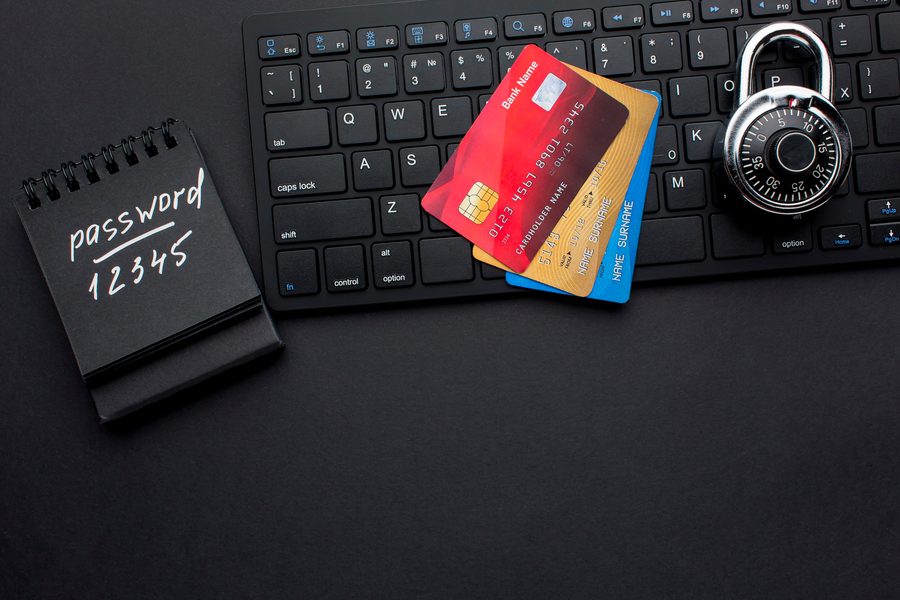
Static authentication fails under real-world conditions. Passwords get stolen constantly. Cards get cloned. Two-factor codes aren’t safe either, not with SIM-swapping and session hijacking now common tools in a fraudster’s kit.
The behavioral biometrics market hit USD 3.45 billion in 2025, driven by demand for authentication that never really switches off. A 2025 report from Market Research Future puts 42.35% of that market squarely in fraud detection and prevention. That’s not a side feature anymore. It’s the core.
The Board of Governors of the Federal Reserve System has said as much directly: “Analyzing swipes, taps, and keystrokes can enhance authentication and mitigate risk.”, Federal Reserve, 2024.
Older rule engines still flag anomalies with static logic, things like “no login from Nigeria.” Attackers have already adapted, routing through geolocated bots that dodge those rules entirely. AI-powered behavioral systems catch the subtler stuff instead, the tiny deviations in how someone actually interacts with a device. That’s what makes Fiserv’s work with Wink more than a feature update. It’s a direct answer to flaws baked into how security used to work. The system isn’t asking who you are. It’s asking how you move.
What Behavioral Biometrics Actually Measures and Why It Pairs with AI
Behavioral biometrics tracks the small stuff: keystroke dynamics, swipe speed, how a device tilts in your hand, the path you take through an app, how long you linger on a screen. None of it answers “who are you.” All of it answers “how do you behave.”
A person’s typing rhythm holds steady even on a bad day, tired or distracted or rushing. AI models train on that baseline over time. Once something breaks the pattern, an oddly fast swipe, a different finger placement, the system flags it.
Face scans and fingerprints are static. Behavioral data isn’t. It keeps working session after session without asking for a fresh scan every time you log in. Paired with AI, that constant stream turns into a risk score that shifts with every tap. Mordor Intelligence’s 2025 report found behavioral layers shrink fraud detection cycles by 25% compared to legacy rule engines in BFSI.
AI also cuts down on false alarms. Say a user logs in from a city they’ve never visited. Normally that trips a fraud alert. But if the typing rhythm and navigation path still match their profile, the system lets it through, assuming correctly that it’s still them. That balance matters more than people realize. Block too many real users and adoption dies. A real-time fraud detection system has to catch the criminals without punishing everyone else.

Fiserv Clover’s 2026 Biometric Rollout: Identity-Based Payments via Wink Integration
Fiserv announced the Wink integration on January 7, 2026, folding the multimodal identity platform straight into Clover devices.
No hardware swap required. Station Duo, Mini, Flex, and Kiosk units all keep running as they are. The integration runs through Wink’s PCI Level 1 and SOC2-compliant gateway, so compliance doesn’t take a back seat to new tech. The system reads faces, palms, and voices, and it still tracks behavioral signals underneath, things like swipe patterns and how a device gets handled.
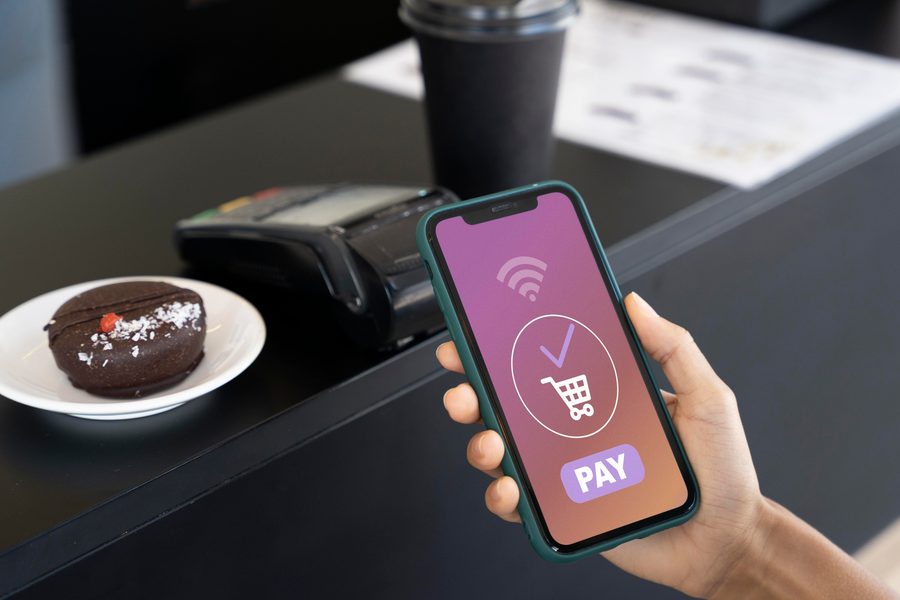
Wink’s AI-based human presence assurance does the heavy lifting against fraud, both online and in-store. Liveness detection confirms an actual person sits behind the screen, not a pre-recorded video or a deepfake. That capability makes loyalty enrollment and age verification possible with zero staff involvement, a natural fit for quick-service restaurants, sports venues, and retail counters.
“In general, if you have a portfolio balance and you’re planning to stretch your withdrawals out over 40 or 50 years, starting with a lower withdrawal rate gives you a higher probability of success.”
says Christine Benz, director of personal finance and retirement planning, Morningstar.
How Fiserv’s System Addresses Friction and Fraud in Physical and Digital Checkouts
Old-school payment systems pile on friction. Swipe the card. Enter the PIN. Scan a fingerprint. Every extra step slows the line down.
Fiserv’s system strips most of that out. Authenticate once with a face or palm scan, then run through several transactions without doing it again. Biometric profiles sit in a secure token vault, kept apart from payment credentials, matching Federal Reserve guidance that authentication methods shouldn’t expose sensitive data, as confirmed in the Federal Reserve’s 2024 guidance on digital payment security.
What does that get you? Faster lines. One identity that follows a customer across channels, whether they’re paying, collecting loyalty points, or proving their age. Most behavioral-only platforms can’t pull that off. This is a hybrid stack instead, continuous behavior tracking layered on top of physiological authentication. It’s already live in pilot programs, with a demo lined up for NRF 2026.
Related reading: AIO Quick Authority: 5 Fintech Mistakes That Can Trigger Account Freezes in 2025.
| System Type | Fraud Detection Speed (Avg.) | False Positive Rate (2025) | Behavioral Data Use |
|---|---|---|---|
| Legacy Rule-Based Engines | 5.2 seconds | 18.7% | Static thresholds only |
| Fiserv Clover-Wink (2026 Hybrid) | 0.9 seconds | 6.3% | Continuous behavioral tracking with AI |
| Behavioral-Only Platforms | 3.1 seconds | 12.4% | Session-based only |
For a concrete look at what those percentage shifts mean in dollars, picture a quick-service restaurant chain in the Atlanta suburbs. Each location runs 800 transactions a day with an average ticket of $11.04, a figure that lines up with Toast’s Q4 2024 restaurant trend data. At the legacy 18.7% false positive rate, roughly 150 real customers get a decline message every day, people who have money in their account and no fraudulent intent. That’s $1,656 in lost revenue before the crew even finishes the lunch rush. Now drop the false positive rate to the Fiserv hybrid’s 6.3%. The daily losses fall to $552, which means the store keeps an extra $1,104 every day it opens its doors. Over a full calendar year, that single location reclaims more than $402,000 in sales that a clumsier filter would have thrown away. Multiply that by a regional chain with 15 units, and the difference becomes a seven‑figure operational gain without a single dollar of extra marketing.
Frequently Asked Questions
How does Fiserv’s behavioral biometrics system detect fraud in real time?
The system analyzes user interactions, keystrokes, swipe speed, device tilt, using AI to build a behavioral baseline. Deviations trigger real-time risk scoring.
Does Fiserv’s system require new hardware?
No. The 2026 Clover-Wink integration works with existing Clover devices: Station Duo, Mini, Flex, and Kiosk units, without hardware changes.
How does the token vault protect biometric data?
Biometric data is stored separately from payment credentials in a secure token vault, as required by Federal Reserve guidance, preventing exposure during transactions.
Why is behavioral biometrics better than facial recognition alone?
Facial recognition is static. Behavioral biometrics evolves with user habits, offering continuous authentication without repeated scans.
Can attackers fake swipe patterns or typing rhythms?
AI models detect subtle anomalies in timing and pressure. Replicating a unique behavioral profile at scale is currently infeasible for most fraud rings.
How does the system handle user mobility?
AI compares interaction patterns across locations. A new login from a different city only triggers alerts if behavioral rhythms deviate, not just geolocation.
Is this system compliant with PCI DSS and SOC2?
Yes. The Wink gateway is PCI Level 1 and SOC2-compliant, ensuring enterprise-grade security standards across all transactions.
What industries are adopting this technology first?
Quick-service restaurants, sports venues, and retail stores are leading adoption due to high transaction volume and need for frictionless, secure checkouts.
How does it reduce false positives compared to older systems?
By focusing on behavioral consistency rather than geographic or device flags, the system lets legitimate users through even when unusual location data appears, reducing false alarms by 66% on average.
Can customers opt out of behavioral tracking?
Yes. Users can disable behavioral biometrics in account settings, though this may require additional authentication for each transaction.
Sources
- Mordor Intelligence, 2025 Behavioral Biometrics Market Analysis
- Market Research Future, Behavioral Biometrics Market Report (2025)
- PCI Security Standards Council – PCI DSS Requirements
- CNBC, “CFP: 4% Rule for Early Retirement Is a Terrible Idea”
- NerdWallet, “Financial Independence, Retire Early: What You Need to Know”
- Morningstar, Retirement Planning Insights
- Toast, Restaurant Trends Report Q4 2024






