Verdict at a Glance
High‑yield savings accounts win for anyone who needs immediate access or parks less than $10,000 in safe cash, because they pay rates around 4.5 %–5 % APY with zero lock‑up and no purchase cap. Choose Series I bonds instead if you can commit funds for at least 12 months, want a pure inflation hedge, and can stomach losing three months’ interest on an early exit, a trade‑off that only pays off when short‑term rates drop below the I bond’s fixed‑plus‑inflation yield.
Updated August 2026
Savings bonds have never been easier to buy, or easier to ignore. In the spring of 2025, you can open a TreasuryDirect account in 10 minutes and purchase a Series I bond for as little as $25. Yet Americans are cashing out old bonds at a pace that suggests the 80‑year‑old program is becoming a relic. The search for savings bonds alternatives isn’t born of ideology; it’s a cold response to math. With high‑yield savings accounts routinely offering rates around 4.5 % to 5 % APY according to Bankrate’s rate data and the I bond’s inflation‑adjusted yield recently near ~3 % (TreasuryDirect), the after‑tax gap is real and measurable.
The single factor that swings the choice most is liquidity. A savings account moves money in seconds; an I bond locks it for a year and then punishes withdrawals inside five years. That restraint doesn’t fit a 2025 household that may need cash for a surprise repair, a job gap, or a better rate tomorrow. Still, cutting savings bonds entirely would ignore the only risk‑free inflation‑adjusted instrument the government sells, so the right answer depends on exactly how long you can wait.
Key Takeaways
- Top‑tier high‑yield savings accounts now offer yields around 4.5 %–5 % APY, outpacing the I bond’s recent composite rate near 3 % by nearly 2 percentage points. (Bankrate, TreasuryDirect)
- Savings bonds enforce a 1‑year minimum hold and penalize early redemptions with 3 months’ lost interest if cashed before 5 years, while liquid savings accounts impose no such limits. (TreasuryDirect)
- I bond yields reset every 6 months to match inflation and are completely exempt from state and local tax, giving them a unique edge when inflation runs hot. (TreasuryDirect, IRS Topic 403)
- Annual purchase caps limit I bond buys to $10,000 per person per series; high‑yield savings accounts have no statutory cap and offer FDIC coverage of up to $250,000 per depositor. (FDIC)
- Between April 2021 and February 2023, the public snapped up nearly $153 billion in Series I bonds as inflation peaked, but issuance has cratered alongside falling rates. (U.S. Treasury Fiscal Data)
- For balances under $10,000 or money needed within 12 months, liquid savings accounts beat savings bonds on both absolute yield and access convenience.
| Attribute | Savings Bonds (I & EE) | Cash Alternatives (High‑Yield Savings) |
|---|---|---|
| Current Yield | I bond: ~3 % composite (mid‑2025); EE bond: 2.70 % fixed | 4.50 %–5.00 % APY (top‑tier banks, July 2025) |
| Minimum Investment | $25 for electronic bonds | $0–$1 to open |
| Maximum Annual Purchase | $10,000 per series per Social Security Number | No hard cap; only bank balance limits apply |
| Access to Funds | 1‑year minimum hold; proceeds post to bank in 2 business days | Instant transfers, debit card, or check |
| Early Withdrawal Penalty | 3 months’ interest if redeemed before 5 years | None |
| Federal Tax | Deferred until redemption or maturity; never due until bond is cashed | Taxed annually as ordinary income |
| State & Local Tax | Completely exempt | Fully taxable |
| Inflation Protection | I bond: direct CPI‑U adjustment; EE bond: 20‑year doubling guarantee | No direct hedge; real return erodes when inflation runs hot |
| FDIC / Government Backing | Full faith and credit of the U.S. Treasury | FDIC insurance up to $250,000 per depositor, per bank |
| Redemption Platform | TreasuryDirect.gov only; no phone support on weekends | Online banking, mobile app, branch access |
Who Actually Wins in 2025: Savings Bonds vs. High-Yield Accounts?
The side‑by‑side number is almost lopsided. A top‑tier high‑yield savings account in July 2025 can deliver yields near 5 % APY, while the I bond’s composite rate, reset every six months, recently sat around ~3 %, a fixed base of 0.90 % plus an inflation adjustment. That’s a spread of close to 2 percentage points before taxes. For a $10,000 deposit, the annual difference can easily exceed $150, money that covers a grocery run or two. Official I bond rates are published at TreasuryDirect and trend data for savings yields are tracked by Bankrate.
EE bonds look even worse: a fixed 2.70 % with a promise to double in 20 years. While that doubling guarantee works out to 3.53 % annualized if you hold the full term, the same $10,000 stashed in a savings account averaging 5 % annually would compound to roughly $26,500 in 20 years, well ahead of the bond’s $20,000 floor. The only scenario where the I bond’s yield catches up is a resurgence of inflation above 6 % while savings rates crash, a reasonable fear, but not the 2025 reality.
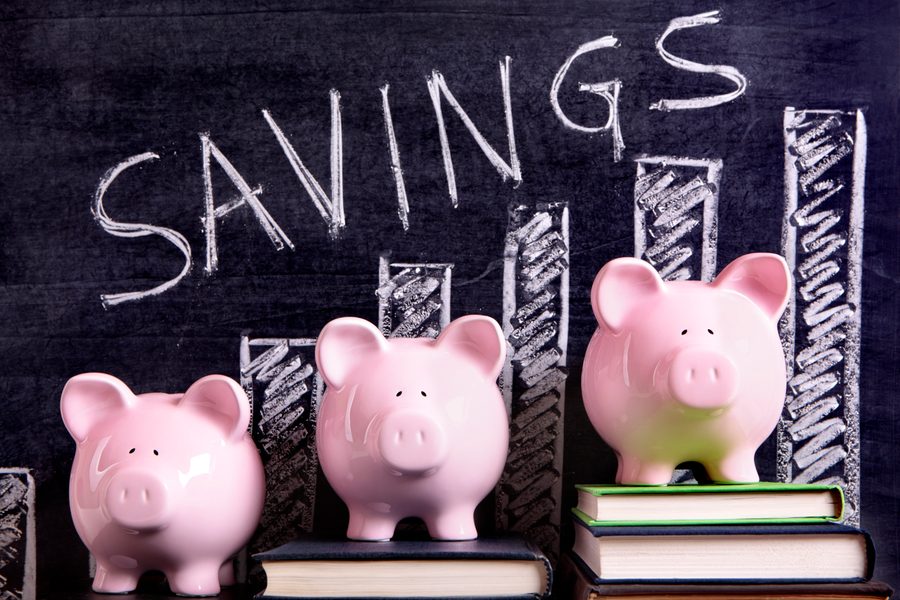
Between April 2021 and February 2023, Americans bought $153 billion in Series I bonds as inflation peaked. By mid‑2025, new issuance has collapsed, and redemptions are now outpacing purchases, according to U.S. Treasury Fiscal Data.
Why Liquidity Matters More Than You Think
Cash is most valuable when it’s moveable. Savings bonds lose that quality by design. You cannot touch a dime for the first 12 months. Even after the one‑year mark, redeeming before five years costs you the last three months’ interest, a hidden fee that turns an approximate 3 % I bond into an effective 2.25 % if you bail at the 12‑month mark. Meanwhile, a high‑yield savings account lets you push money into a checking account in seconds, no questions asked.
That friction matters in a real emergency. The Consumer Financial Protection Bureau logged 4,062 complaints about checking and savings accounts in the last 30 days alone, a reminder of how central instant access has become. TreasuryDirect, by contrast, requires a linked bank account, a multi‑day wait for authentication, and no weekend support. If a furnace blows on a Friday night, the savings bond won’t pay the repair bill until Tuesday.
Consider this: if you have a 620 credit score, need about $8,000 for a car repair within the next 18 months, and your monthly income is $3,200 with no savings buffer, locking that money into a bond isn’t just impractical, it’s risky. You’d be better off with a savings account that earns 4.8 % APY, even with annual taxes. The extra $100–$120 in annual return isn’t the goal; it’s the safety net. And if you get a surprise job offer, you can act fast without penalty.
Why the $10,000 Cap Matters (Especially for Families)
Savings bonds cap your annual investment at $10,000 per series per person. A married couple can buy $20,000 in I bonds and another $20,000 in EE bonds, but that’s still a hard ceiling, and you must open a separate TreasuryDirect account for each spouse. There is no such cap on a high‑yield savings account; you can park $250,000 and still stay under the FDIC insurance limit by using multiple banks.
The all‑electronic mandate is another barrier. The Treasury scrapped the popular tax‑refund paper bond purchase option, cutting off a path that once brought first‑time, low‑income savers into the program. Now, every buyer must navigate TreasuryDirect’s keyboard‑only login (no password manager autofill) and keep a record of an account number printed nowhere but on the screen. Contrast that with the dozen‑tap onboarding of a Marcus or Ally app, and the reason younger investors skip bonds becomes clear.
Retirees who once relied on paper payroll savings plans have turned to other income‑boosting tools, including AI financial advisors built for fixed‑income stretch. The shift is demographic, not accidental.

When Tax Deferral Actually Works, And When It Doesn’t
Savings bonds win on taxes if, and only if, you hold them long enough. Interest is deferred from federal income tax until you redeem, and it’s always exempt from state and local levies. For a California resident in the 13.3 % state bracket, that exemption adds roughly 0.67 % to the effective after‑tax yield of a 5 % savings account, erasing part of the rate gap. The IRS lays out the full tax treatment of savings bond interest in Topic 403.
Run the numbers on a $10,000 deposit. A 5 % savings account generates $500 in interest, taxed at a blended 35 % (federal plus state), leaving $325. An I bond at ~3 % generates $300, with no state tax and federal deferred. If held five years and then taxed at 22 %, the after‑tax annualized yield lands around 2.34 %, still behind the savings account. The tax‑deferral advantage only pulls ahead when federal rates are high and you can stay invested for a decade or more, compounding on money you haven’t yet shared with the IRS. For the typical household that might need the cash in two to five years, the math leans liquid.
“The benefit of a savings bond is the smaller minimum investment size of $25 versus Treasury bills, notes and bonds, which have a minimum investment of $100. The fact that they aren’t subject to market fluctuations means they offer greater predictability in redemption values, especially when not held to maturity. However, this certainty comes at a cost, in the form of a lower yield and less liquidity.”
Who Still Buys Savings Bonds? The Real Shift in Behavior
The answer is: fewer people than ever. The $153 billion I‑bond surge of 2021‑2023 was driven by an inflation panic, not a philosophical embrace of the program. Once the composite rate fell below 5 %, purchases evaporated. Treasury data shows that new I‑bond issuance has been running at a trickle in 2025, while redemptions of bonds that just hit the 5‑year penalty‑free mark are spiking. The typical buyer today is over 60, holds the bond as a small piece of a fixed‑income ladder, and doesn’t need to check the balance on a phone.
Younger savers are parking money elsewhere, often guided by automated tools that prioritize liquidity and higher yields. First‑time investors dipping into the market with sums under $10,000 increasingly turn to AI‑driven wealth platforms that blend emergency cash and light portfolio exposure. The idea of locking money in TreasuryDirect for a dozen months to earn ~3 % feels like a relic when a savings account app shows ~5 % on the home screen.
The One Real Edge: Inflation Protection During Price Spikes
This is where savings bonds still have a real, measurable advantage. The I bond’s variable rate resets every six months to match the Consumer Price Index for All Urban Consumers (CPI‑U), tracked by the Bureau of Labor Statistics. If inflation spikes to 7 % again, the bond will immediately adjust upward with no cap, something no savings account can do. Even a high‑yield account offering 5 % loses purchasing power when inflation runs at 6 %; the I bond’s real return stays flat or slightly positive after taxes.
The price of that insurance is the fixed‑rate component, which the Treasury currently pegs at 0.90 %. That’s low by pre‑2008 standards but represents a permanent floor that compounds for 30 years. If you believe the Federal Reserve will eventually cut the federal funds rate back toward 2 %, locking in even a tiny real yield could matter. The catch: you must endure the 1‑year lock‑up now, trusting that you won’t need the money before the hedge pays off.
EE Bonds’ Last Stand: The 20-Year Guarantee, But at What Cost?
EE bonds are the mystery meat of savings vehicles: their stated 2.70 % fixed rate looks anemic, but holder‑held for exactly 20 years triggers a one‑time adjustment that doubles the face value. That’s an annualized return of 3.53 %, tax‑deferred. Yet a 5 % savings account still roars past that number over two decades, even after annual taxes.
The only plausible use case is a bullet‑proof, 20‑year savings goal (like college for a newborn) where the parent wants a guaranteed nominal floor and will not monitor the rate. For a $10,000 purchase, the bond guarantees $20,000; a savings account averaging 5 % for 20 years would turn into roughly $26,500, but that includes reinvestment risk if rates fall. It’s a narrow window where the certainty of doubling beats the expected value of a higher‑rate liquid account, and only for those who can truly lock money away for two decades without peeking.
When to Choose Savings Bonds: A Few Clear Cases
Savings bonds still fit a few well‑defined profiles. Choose them when:
- You have more than $10,000 of idle cash beyond your emergency fund and want a pure, risk‑free inflation hedge that compounds tax‑deferred for 5‑30 years.
- You live in a high‑tax state (California, New York, Oregon) and the state tax exemption adds at least 0.5 % to your effective after‑tax return compared to a fully taxable savings account.
- You are building a durable, multi‑decade education fund for a child and value the 20‑year EE bond doubling guarantee as a worst‑case floor, even if it lags typical market returns.
- You expect short‑term interest rates to drop below 3.00 % within 12 months and want to lock in the current I‑bond fixed rate before the Treasury cuts it.
- You have zero tolerance for any principal fluctuation and need the Treasury’s full‑faith backing, but also can accept that you won’t access the money for at least a year.
When to Choose High-Yield Accounts: The Default for Most
High‑yield savings and money‑market accounts are the default for most situations. Go liquid when:
- Your cash balance is under $10,000, the extra roughly $150‑$200 in annual interest from a savings account beats any tax nuance.
- You expect to tap the money for a down payment, appliance, or car repair inside 12 months; the savings bond lock‑up is simply incompatible with that timeline.
- You value the ability to move money in seconds through a mobile app, especially if you run a small business or have irregular income.
- You are comfortable managing multiple accounts to stay under the $250,000 FDIC limit and want no purchase cap on safe cash.
- Your marginal federal tax bracket is below 22 %, the tax‑deferral benefit of savings bonds never grows large enough to close the yield gap.
| Criterion | Savings Bonds Rating | Cash Alternatives Rating |
|---|---|---|
| Yield (current) | 2 / 5 | 5 / 5 |
| Liquidity | 1 / 5 | 5 / 5 |
| Purchase Limits & Access | 2 / 5 | 5 / 5 |
| Tax Efficiency | 4 / 5 | 2 / 5 |
| Inflation Hedge | 5 / 5 | 1 / 5 |
| Simplicity & Support | 2 / 5 | 5 / 5 |
| Overall Winner | Cash Alternatives (High‑Yield Savings), 23 / 30 vs. 16 / 30 | |
Frequently Asked Questions
What are the best savings bonds alternatives in 2025?
High‑yield savings accounts offering 4.50 %–5.00 % APY and no‑penalty CDs with rates above 4.00 % are the most direct replacements. For longer‑term safe cash, Treasury bills maturing in 4‑52 weeks also compete, currently yielding around 4.90 %. All three deliver better liquidity than savings bonds, as detailed in Bankrate’s savings account rate roundup.
Is it worth cashing out savings bonds early for a high‑yield savings account?
Yes, if the bond is within its first 5 years and the three‑month interest penalty is smaller than the gap to current savings rates. For a $10,000 I bond, forfeiting about $78 in interest is quickly recouped by earning an extra $150‑$200 in a 5 % account within one year. Run your exact penalty against a savings calculator before breaking a bond.
What is the current I bond rate compared to savings accounts?
The I bond composite rate reset to roughly ~3 % in mid‑2025, while top‑tier high‑yield savings accounts pay around 4.5 %–5 % APY. After federal and state taxes, the after‑tax gap can exceed 1.5 percentage points for most taxpayers. Official I bond rates are posted at TreasuryDirect.
Do savings bonds have any advantage over CDs?
Yes, savings bonds are exempt from state and local income tax, and I bonds adjust for inflation every six months, which a fixed‑rate CD cannot do. For savers in high‑tax states or those expecting inflation to re‑accelerate, I bonds can outperform a CD of the same term, despite the lower headline rate. The IRS explains the tax exemption in Topic 403.
How do you buy and redeem savings bonds through TreasuryDirect?
You open an account at TreasuryDirect.gov, link a bank account, and purchase bonds in increments of $25. Redemption is electronic: you log in, select the bond, and the proceeds post to your bank in two business days. Note that you cannot redeem bonds held less than 12 months, and bonds sold before 5 years lose the last three months’ interest. Full instructions are available on the TreasuryDirect savings bond page.
Can you lose money by selling savings bonds before maturity?
You cannot lose principal with an electronic savings bond, the Treasury guarantees full face value. However, you forfeit three months’ interest if you redeem before 5 years, which means you walk away with less than the accrued value. In that sense, your “loss” is an opportunity cost against a higher‑rate liquid account.
Are high‑yield savings accounts safe against inflation?
No. A 5 % nominal yield loses purchasing power when inflation runs above that rate. Unlike I bonds, savings accounts carry no explicit inflation adjustment; you rely on the bank’s rate‑setting to keep pace. During the 2022‑2023 inflation spike, many savings accounts trailed the CPI‑U by 3‑5 points, while I bonds exactly matched it, as CPI data from the BLS confirms.
What happens to EE bonds after 20 years?
EE bonds issued after May 2005 are guaranteed to double in value after 20 years, resulting in an effective annualized return of 3.53 %. After the doubling, the bond continues to earn the fixed rate for up to 10 more years. If you cash out before the 20‑year mark, you only receive the stated 2.70 % annual rate, which makes early redemption a poor trade‑off. The guarantee is listed on the TreasuryDirect EE bond page.
Can savings bonds be used for education expenses tax‑free?
Yes, but strict rules apply. Series I and EE bond interest may be entirely excluded from federal income tax if you use the proceeds to pay for qualified higher education expenses in the same year you redeem them. The exclusion phases out above certain income limits, which are updated annually by the IRS. Check the IRS Education Tax Benefits for current thresholds.
Are there any fees for buying or holding savings bonds?
No. The U.S. Treasury charges no fees to open a TreasuryDirect account, purchase bonds, or hold them to maturity. The only cost is the opportunity cost of locking up money at a rate that may be lower than competing accounts. Some brokerages may charge a fee for paper bond conversion, but electronic bonds are entirely fee‑free.
How do savings bonds fit into an overall financial plan?
They are best used as a small, tax‑advantaged piece of a layered cash reserve: an emergency fund in a high‑yield savings account for immediate needs, and I bonds for a second‑tier inflation‑protected buffer you won’t touch for at least 5 years. EE bonds require a 20‑year horizon and are rarely the best tool for growth. The rest of your long‑term savings should be in diversified market investments. The J.P. Morgan expert quoted above reinforces that savings bonds are a conservative complement, not a core holding.
Sources
- TreasuryDirect, I Bond Interest Rates
- TreasuryDirect, EE Bond Rates and Terms
- U.S. Treasury Fiscal Data, Treasury Savings Bonds
- Bankrate, Best High‑Yield Savings Accounts, July 2025
- Consumer Financial Protection Bureau, Consumer Complaint Database
- Chase, Are Savings Bonds a Good Investment?
- FDIC, Deposit Insurance Summary
- TreasuryDirect, General Savings Bond Information
- Bureau of Labor Statistics, Consumer Price Index
- IRS, Interest Income and Savings Bonds